

A summer return ticket from Interlaken Ost to the Jungfraujoch costs CHF 271.20 (about US$325) at full fare in 2026, and on a cloudy day it buys you a very expensive look at the inside of a cloud. Almost everything else around Interlaken is cheaper, closer and far more forgiving of bad weather. So the order you do things in matters more than the list of things to do.
Plan the region around the forecast, not the famous names. Keep one clear morning for the high mountain, fill the other days with lakes, waterfalls and smaller summits, and buy the pass that fits that plan.

Three decisions to make before you book anything
How many days
Two full days covers the Jungfraujoch and one valley properly. Three days is the sweet spot: one for the high mountain, one for Grindelwald or the Lauterbrunnen valley, and one for the lakes and Harder Kulm, with the weather deciding which falls on which day. With four or more you can add the Schilthorn, Schynige Platte and a long walk without rushing.
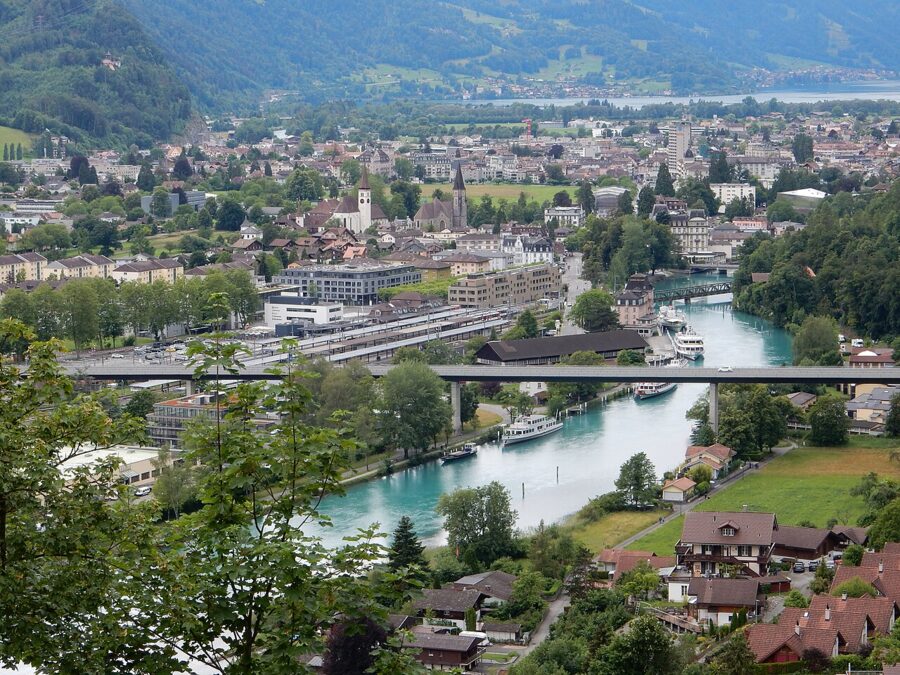
Every excursion below starts from Interlaken Ost station. The Bernese Oberland Railway leaves from here and splits at Zweilütschinen for Lauterbrunnen and Grindelwald, and the Lake Brienz boats leave from the canal behind the platforms.

Which season, and what is closed
The Jungfraujoch, the St. Beatus Caves and the Lake Thun boats run all year; most of the rest is seasonal. In 2026 Harder Kulm ran from early April to 29 November, the Schynige Platte railway from mid-June to 25 October, and the Trümmelbach Falls from the beginning of April to early November. BLS stops the Lake Brienz boats from 7 December until spring.
Late October and November is the maintenance window. In 2026 the Lauterbrunnen-Mürren railway and cableway closed from 26 October to 6 November, the First cable car from 26 October to 27 November, the Eiger Express from 9 to 20 November, and the Stechelberg-Mürren cableway from 19 to 30 October, with a shuttle bus instead. If your dates fall in that window, check the operating notices before you buy a pass.
July and August bring the longest hours and the biggest queues, and the Jungfrau Railway seat reservation is compulsory from 1 May to 31 October. Late June and September are the months I would pick: everything is running and the crowds thin. Winter is cheaper on the Jungfraujoch and beautiful in the valleys, but Schynige Platte is shut and the Lake Brienz boats are not running.
Which pass pays: a worked comparison
The Jungfrau Travel Pass covers the region’s trains, cableways, buses and lake boats; in 2026 it cost CHF 210 (about US$250) for three days, rising to CHF 330 for eight, with a reduced adult rate from CHF 165 and children at CHF 30. The Jungfraujoch itself is extra: a “connecting ticket” up from Eigergletscher costs CHF 63, or CHF 89 from 1 May to 31 October.
The Berner Oberland Pass covers a wider area, including the Schilthorn and Lake Thun: CHF 240 (about US$285) for three consecutive days in second class, or CHF 168 with a Half Fare Card or Swiss Travel Pass. It stops at Grindelwald and Wengen and gives 25% off from there to the Jungfraujoch. The Swiss Travel Pass (CHF 254, about US$300, for three days in second class) covers the whole country but only discounts most mountain railways here, and the Swiss Half Fare Card costs CHF 150 (about US$180) for a month and halves almost everything.
Here is how they compare on a three-day summer plan from Interlaken Ost: the Jungfraujoch with a seat reservation, Harder Kulm, Schynige Platte, Grindelwald-First and Mürren, all return in second class, at 2026 adult fares from the Jungfrau Railways price calculator.
| Option | Pass | Jungfraujoch + seat | Harder Kulm | Schynige Platte | First | Mürren | Total (CHF) |
|---|---|---|---|---|---|---|---|
| Single tickets | 0 | 281.20 | 44 | 75.60 | 105.60 | 39.20 | 545.60 |
| Half Fare Card | 150 | 150.60 | 22 | 37.80 | 52.80 | 19.60 | 432.80 |
| Jungfrau Travel Pass, 3 days | 210 | 99 | incl. | incl. | incl. | incl. | 309 |
| Berner Oberland Pass, 3 days | 240 | 199.60 | 22 | incl. | 38 | incl. | 499.60 |
| Swiss Travel Pass, 3 days | 254 | 199.60 | 22 | 34 | 38 | incl. | 547.60 |
For a stay based here, the Jungfrau Travel Pass wins by a distance, even for two days: the three-day pass plus the summit supplement costs less than the Jungfraujoch and First at full fare. The Berner Oberland Pass earns its price if you add the Schilthorn (free with it, CHF 91.40 return from Mürren otherwise) and Lake Thun. The Swiss Travel Pass only makes sense when it is also carrying you across the country.
Two traps. The Swiss Travel Pass cuts the summer Jungfraujoch return to CHF 189.60, about 30% off rather than half. And the Good Morning ticket, a discount on the first two trains up from May to October, cannot be combined with the Half Fare Card, the Swiss Travel Pass or rail passes; its own page says 20%, the summary price page 15%, so check at checkout.
The Jungfraujoch, done properly
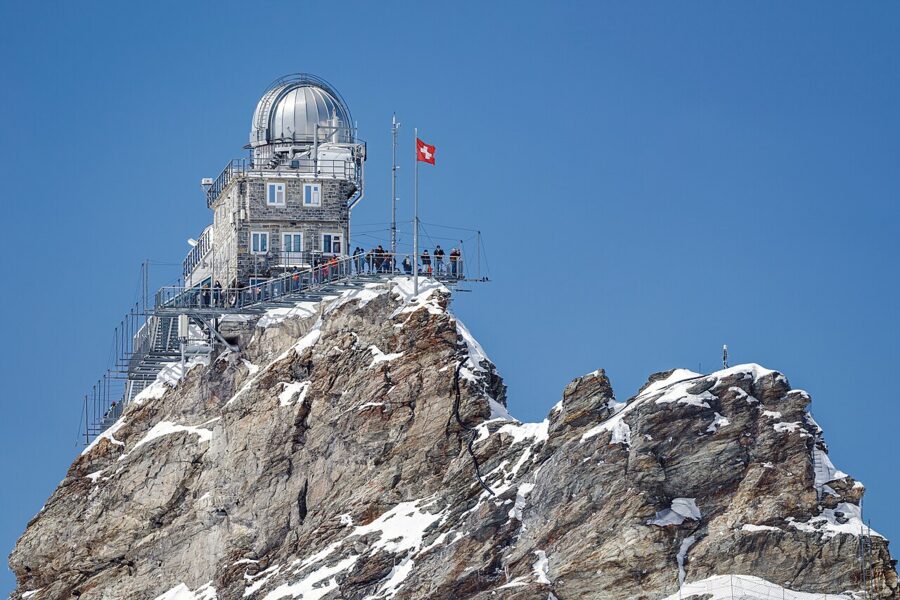
The Jungfraujoch is a saddle at 3,454 metres between the Mönch and the Jungfrau, and its station is the highest in Europe; the railway has run through the Eiger and the Mönch since 1912. It is expensive and busy, and it is still the one excursion I would not skip on a clear day.
Getting up: the fast way and the scenic way
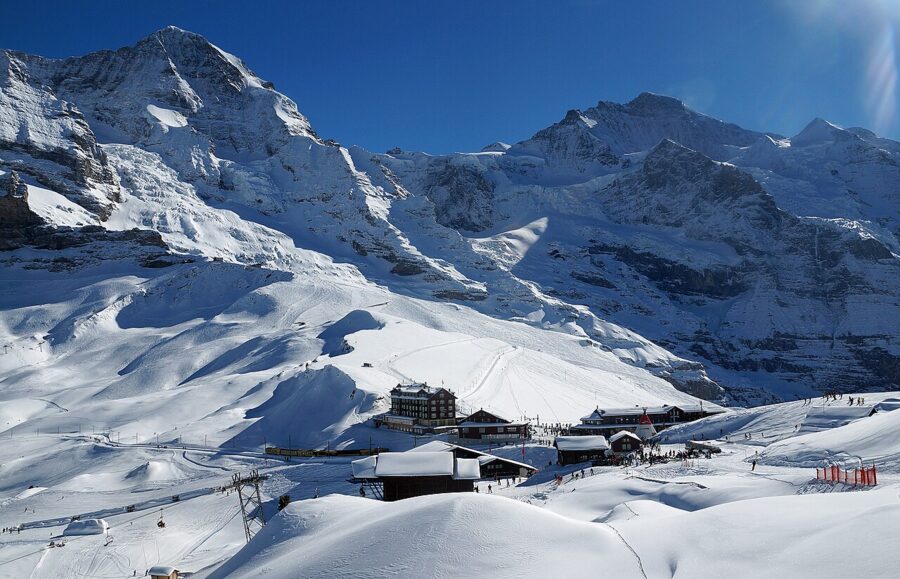
The fast route takes the train to Grindelwald Terminal, the Eiger Express gondola to Eigergletscher in 15 minutes, then the Jungfrau Railway through the tunnel for the last 26 minutes: 1 hour 30 minutes in all from Interlaken Ost. The older route runs via Lauterbrunnen, Wengen and Kleine Scheidegg by cog railway. It is slower but shows you the Lauterbrunnen valley from above, and I would use it one way.
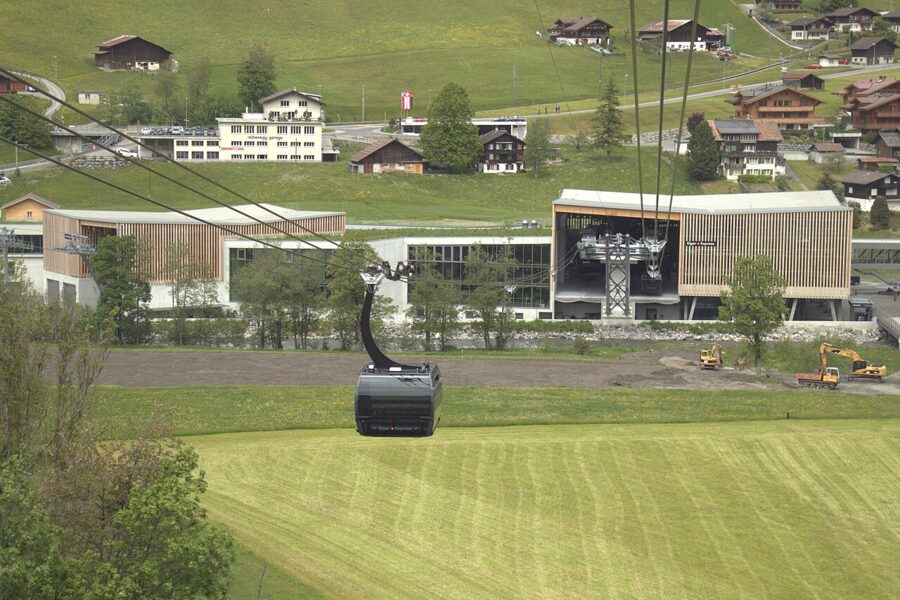

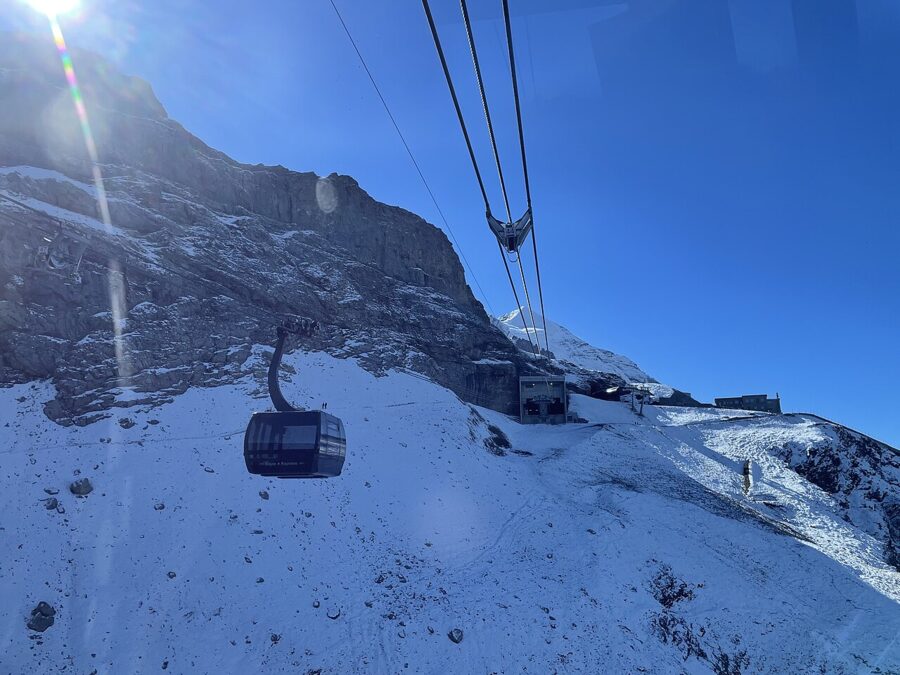

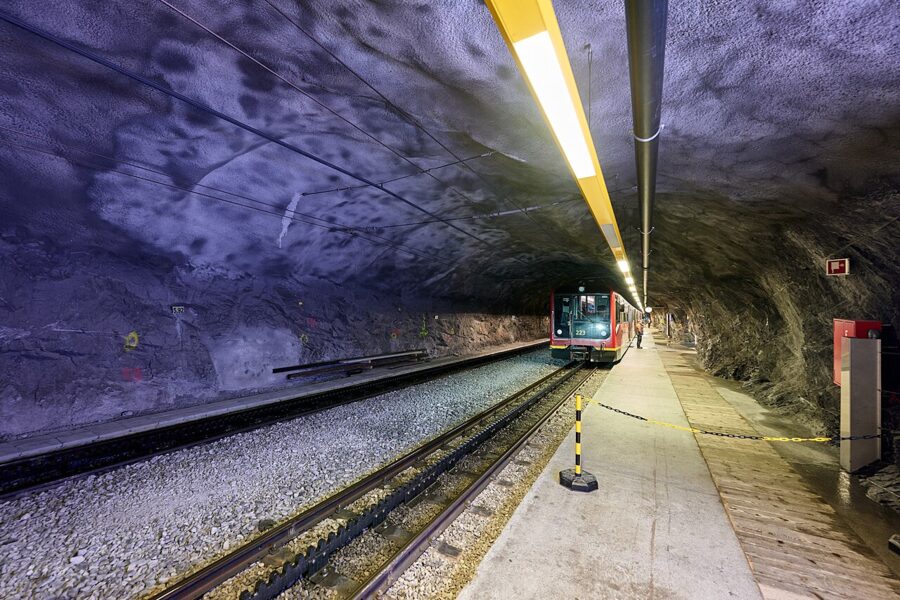
Inside the mountain the train stops for five minutes at Eismeer, around 3,160 metres, so you can look out at the ice. From May to October you need a seat reservation (CHF 10, about US$12) for the Jungfrau Railway section, which fixes your time slot. It can be cancelled free until 9.59pm the day before, which is exactly why you should not book days ahead.
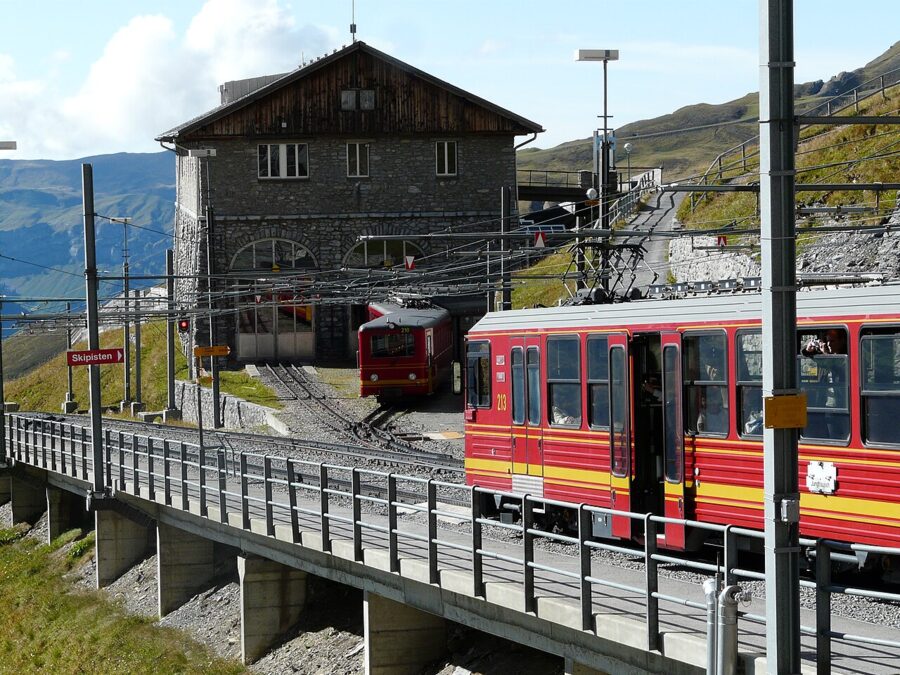

Plan the day backwards from that slot. The time on a reserved ticket is the departure from Eigergletscher or Kleine Scheidegg, so leave Interlaken Ost at least 30 minutes earlier, more on the classic route.
Weather, webcams and the morning-of decision
The rule that saves the most money: decide on the morning. Look at the Jungfraujoch webcam, a live picture from the Sphinx, and the MeteoSwiss forecast. Cloud in Interlaken does not always mean cloud at the top, which often sits above it. If the webcam shows white, go to the lakes and keep the Jungfraujoch for the next clear morning.
The first two connections from Interlaken Ost (7.04am and 7.34am in the Good Morning timetable) put you on the summit before 9.15am, ahead of the crowds and of the cloud that builds on many summer afternoons.
What is up there
Allow at least two hours at the top. A lift climbs to the Sphinx terrace at 3,571 metres, which looks down the Aletsch Glacier, the longest in the Alps at 22 kilometres (about 14 miles) and the heart of the Swiss Alps Jungfrau-Aletsch UNESCO World Heritage Site. Below the station is the Ice Palace, carved tunnels with ice sculptures, and outside a glacier plateau with snow guaranteed all year.
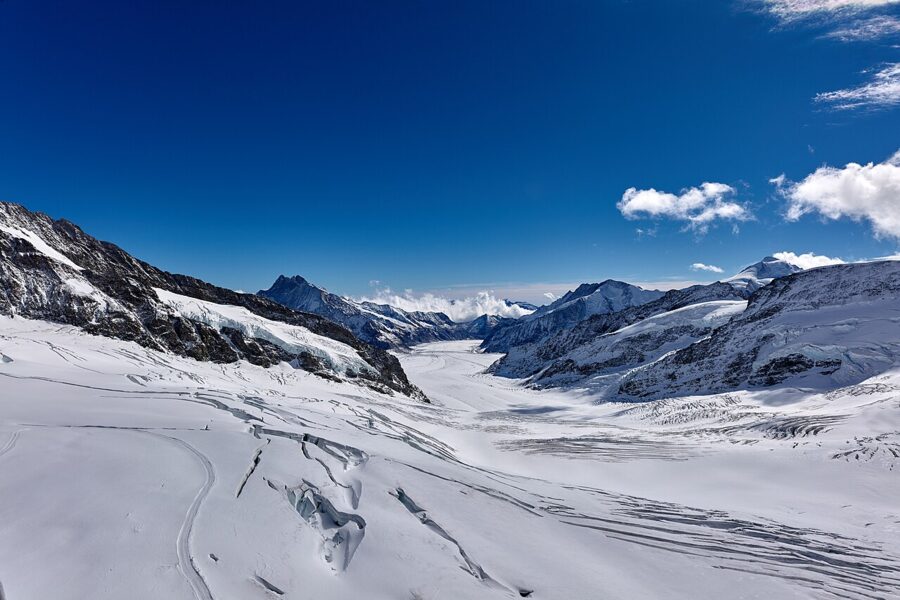
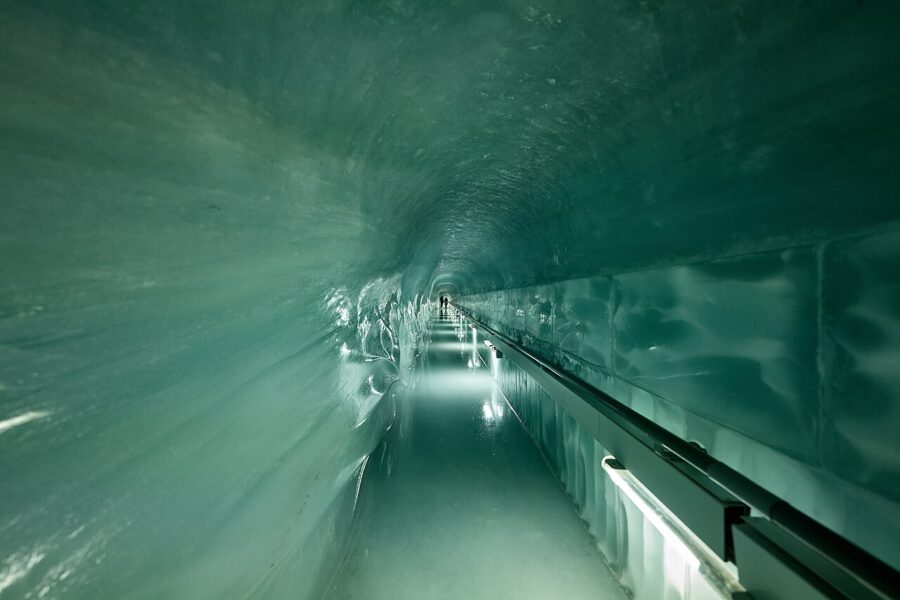
The rest is a short indoor circuit: a multimedia walk through the railway’s history, a 360-degree film, the highest Lindt shop in the world, and several restaurants, including a self-service Indian one called Bollywood, which tells you how many Indian travellers make this trip. The Snow Fun Park adds a zip line, the Tyrolienne, over the glacier.
Altitude, clothing and children
Expect frost at the top in summer as well as winter. Jungfrau Railways recommends layers, a warm jacket, closed shoes, a hat, gloves and sunglasses; a packable down jacket fits in a carry-on. Drink water, move slowly, and skip the trip with a cold, heart or lung trouble, late pregnancy or a child under two, all of which the railway lists as reasons not to go that high.
Children under six travel free. Those aged 6 to 15 pay CHF 20, or travel free with a Swiss Junior Travelcard or the Swiss Family Card that comes with a Swiss Travel Pass, but still need the seat reservation from May to October.

Interlaken itself: Harder Kulm, the lakes and the caves
These are the attractions that keep a cloudy day useful. All of them start within minutes of the town centre, and most need no booking.
Harder Kulm
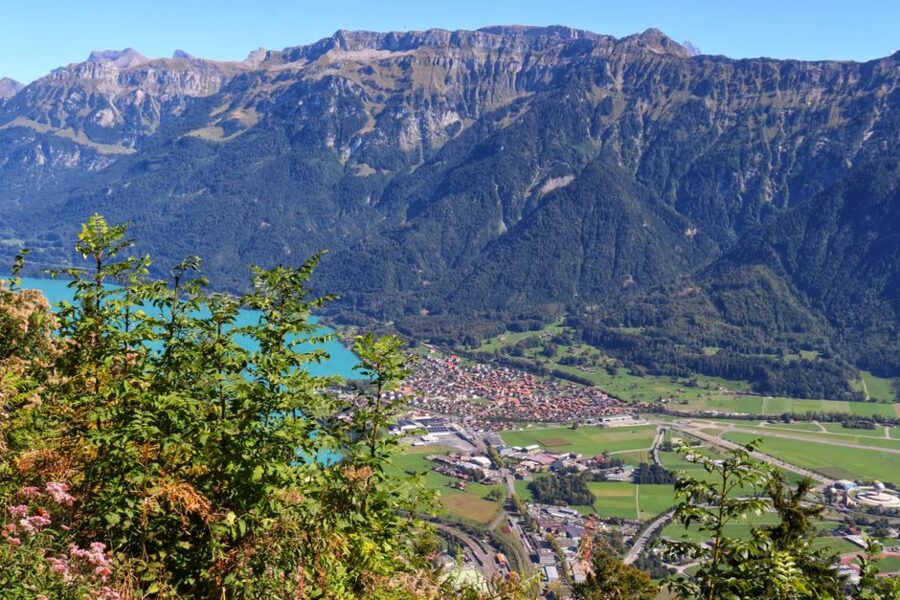
Harder Kulm is Interlaken’s own mountain: a funicular from a valley station a short walk from Interlaken Ost climbs to 1,322 metres in ten minutes. The Two Lakes Bridge platform puts Lake Thun on one side, Lake Brienz on the other and the Eiger, Mönch and Jungfrau ahead. A return cost CHF 44 (about US$52) in summer 2026 and CHF 38 in spring and late autumn, half price with a Half Fare Card or Swiss Travel Pass.
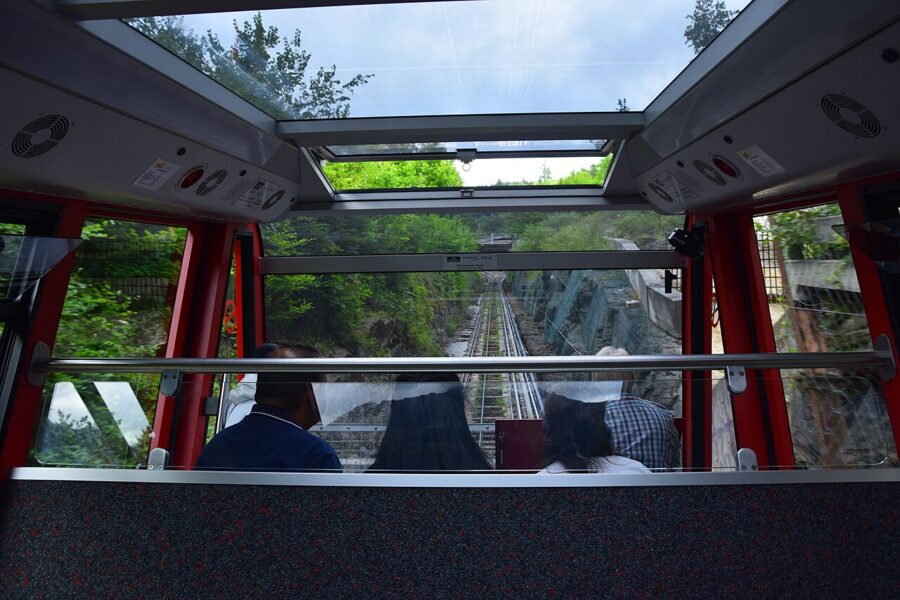

Allow an hour, longer for dinner. The railway runs evening trips timed for sunset and lists alphorn concerts at the Panorama Restaurant from 6.30pm, which makes this the best evening outing in town. The Hardergrat ridge path that starts here is a serious, exposed hike for sure-footed walkers only.
The Höhematte and the paragliders
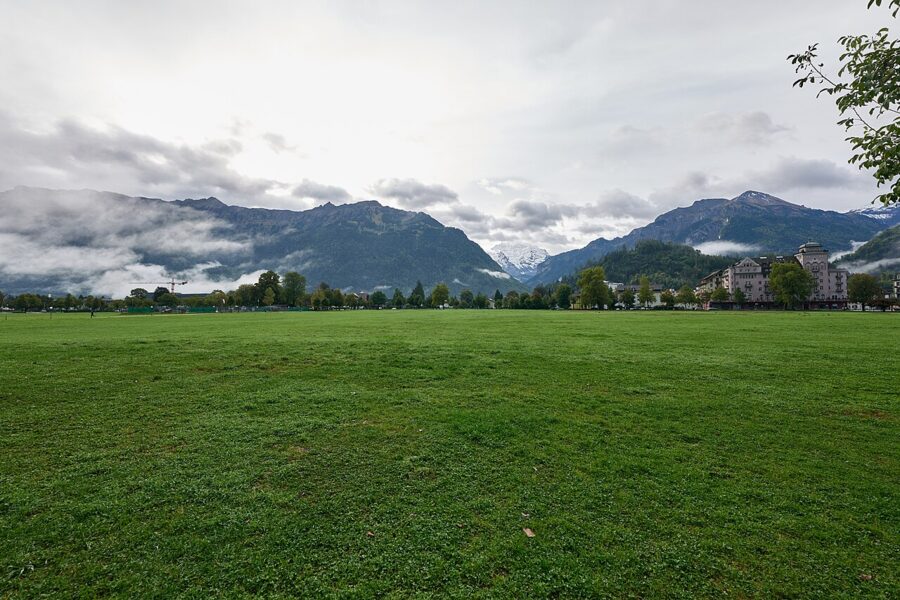
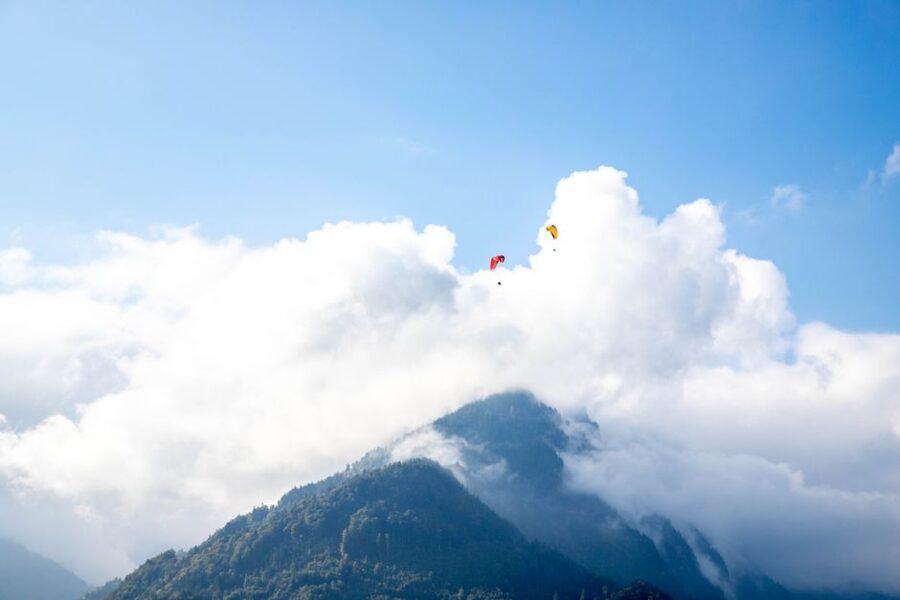
The Höhematte is the big lawn in the middle of Interlaken, with the Jungfrau framed at the far end on a clear day. Many tandem paragliding flights land here, and watching them costs nothing. Interlaken Tourism also lists skydiving, hang gliding, a canyon swing in the Grindelwald glacier gorge and a rope park with 120 obstacles; prices vary by operator, so compare a few.
Lake Brienz: Iseltwald and the Giessbach Falls
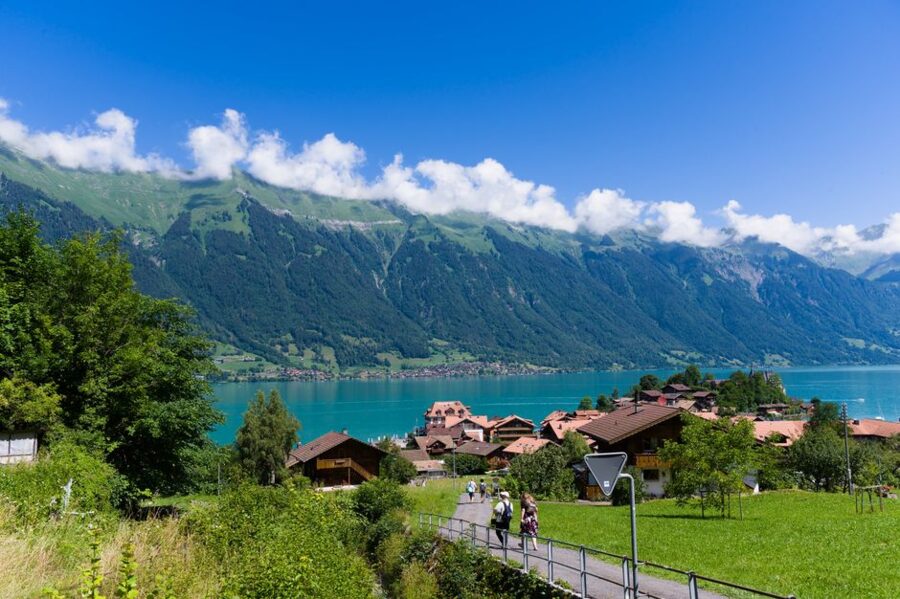
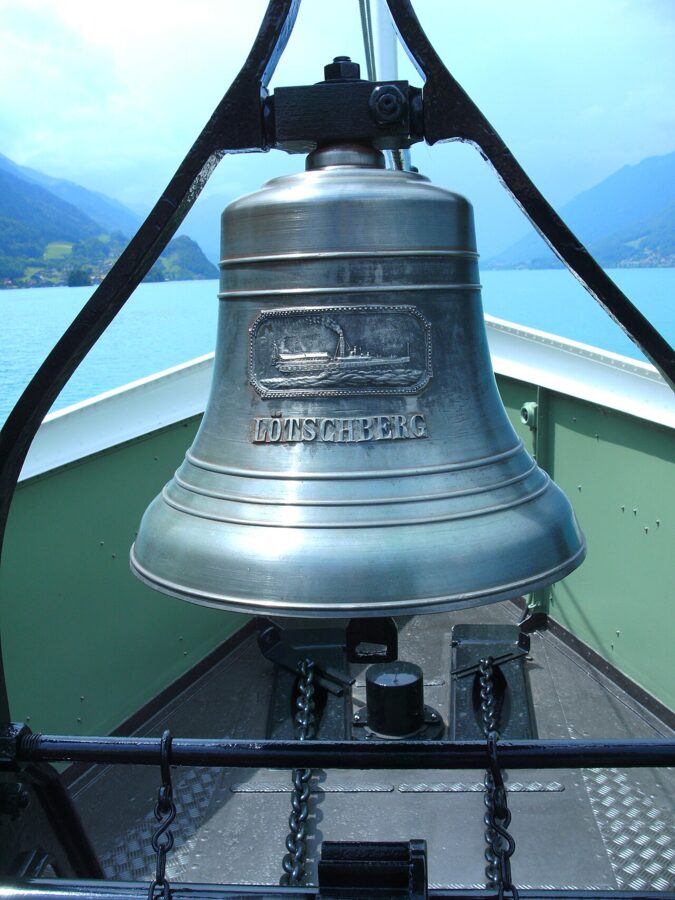
The turquoise lake is the easiest half day in the region. BLS gives the boat from Interlaken Ost as about 45 minutes to Iseltwald, an hour to Giessbach and 1 hour 15 minutes to Brienz; the full round trip takes about three hours. The Swiss Travel Pass, the Jungfrau Travel Pass and dated Eurail or Interrail passes are valid, and the Half Fare Card halves the fare.
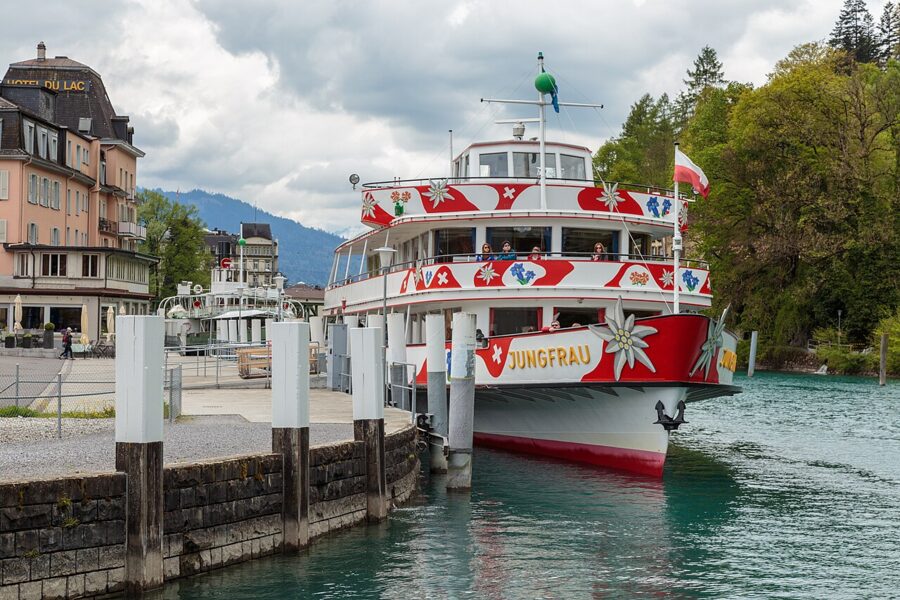

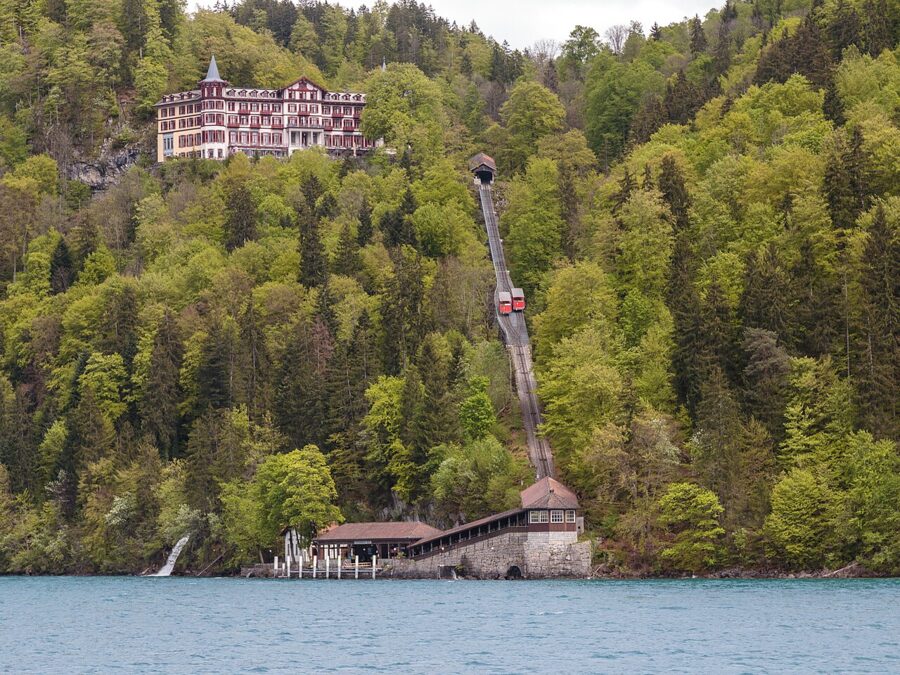
Get off at Giessbach See for the Giessbach funicular, opened in July 1879, up to the Grandhotel Giessbach. The falls tumble past the hotel in 14 steps over about 400 metres, with paths and footbridges alongside; give it two hours with the boat. The funicular’s summer season runs from April to October, with a reduced service in winter.


Lake Thun and the St. Beatus Caves
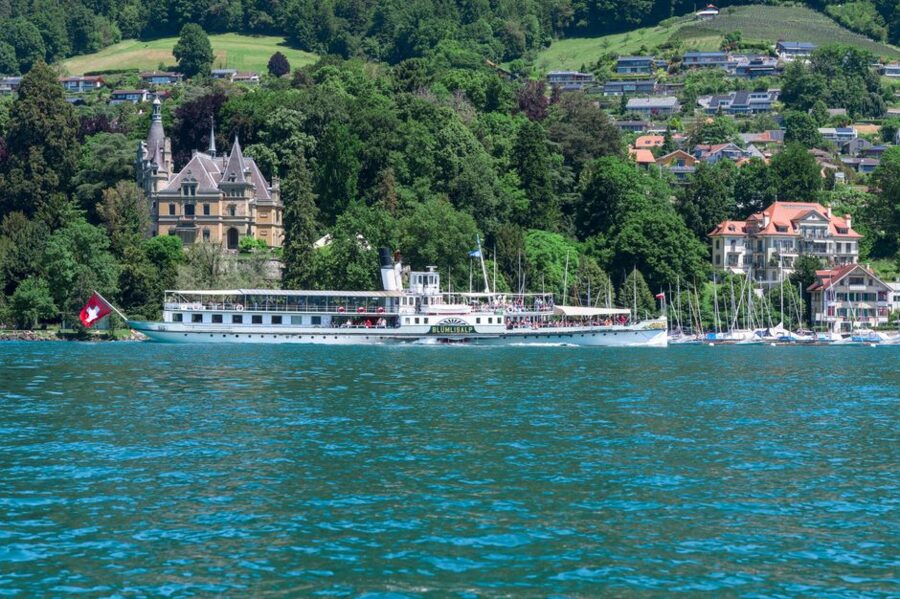
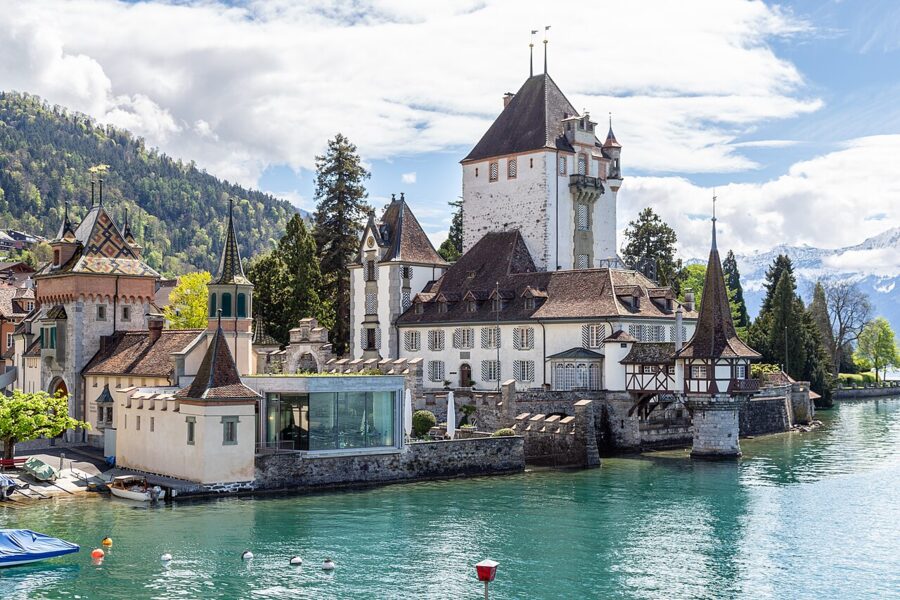
Lake Thun is longer, deeper blue and lined with castles, and BLS runs boats on it all year; Thun to Interlaken West takes about 2 hours 10 minutes. A good half day is the boat one way and the train the other, with a stop at Oberhofen for the castle.

The St. Beatus Caves on the north shore are the best rainy-day choice: about a kilometre of lit passages, waterfalls and stalactites at a steady 8 to 10°C. Admission in 2026 was CHF 22 (about US$26) for adults and CHF 13 for children aged 6 to 16, audio guide and museum included. The “Beatushöhlen” bus stop is at the entrance, while the boat pier is a 20- to 25-minute walk uphill.
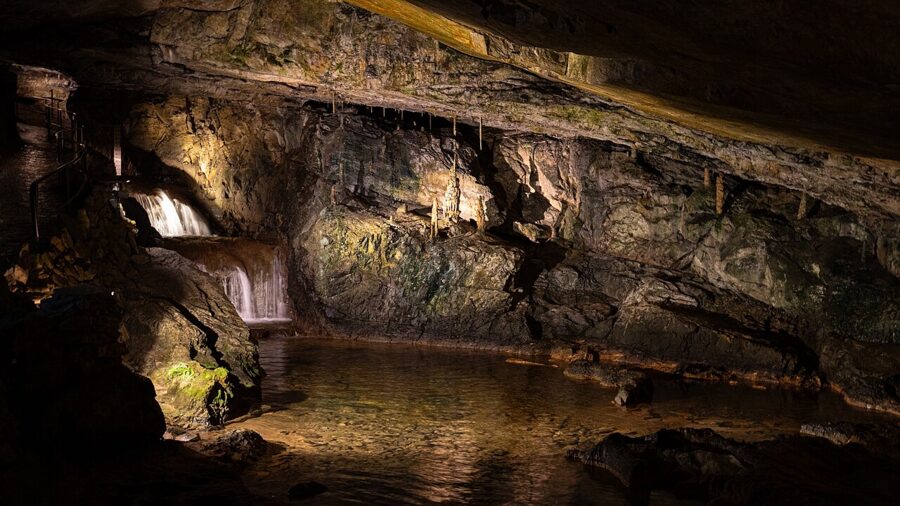

Winter hours (21 November 2026 to 20 March 2027) are 10am to 5pm, until 6.30pm on Saturdays. From 21 March 2027 the caves open at 9am and stay open until 9pm on Fridays and Saturdays, one of the few attractions you can do after dinner. BLS sells a boat and cave combination with 50% off admission.
Schynige Platte
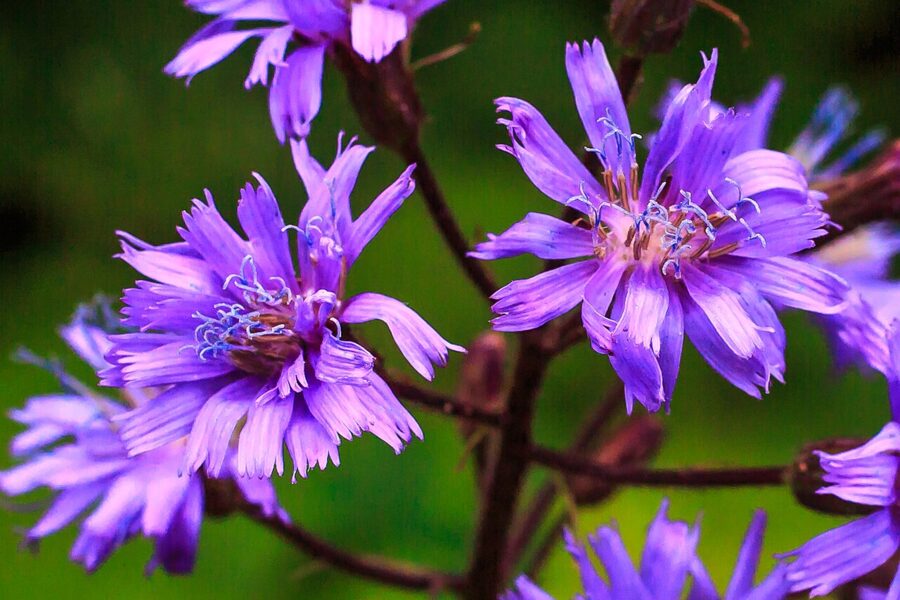
The Schynige Platte railway has climbed from Wilderswil, a few minutes from Interlaken Ost, to 1,967 metres since 1893. At the top are a Botanical Alpine Garden with around 800 plants, a skywalk, free alphorn concerts from 11am to 2pm and a two-and-a-half-hour panorama walk. A return from Wilderswil cost CHF 68 (about US$81) in summer 2026, half with a Half Fare Card or Swiss Travel Pass, and it is included in both regional passes.
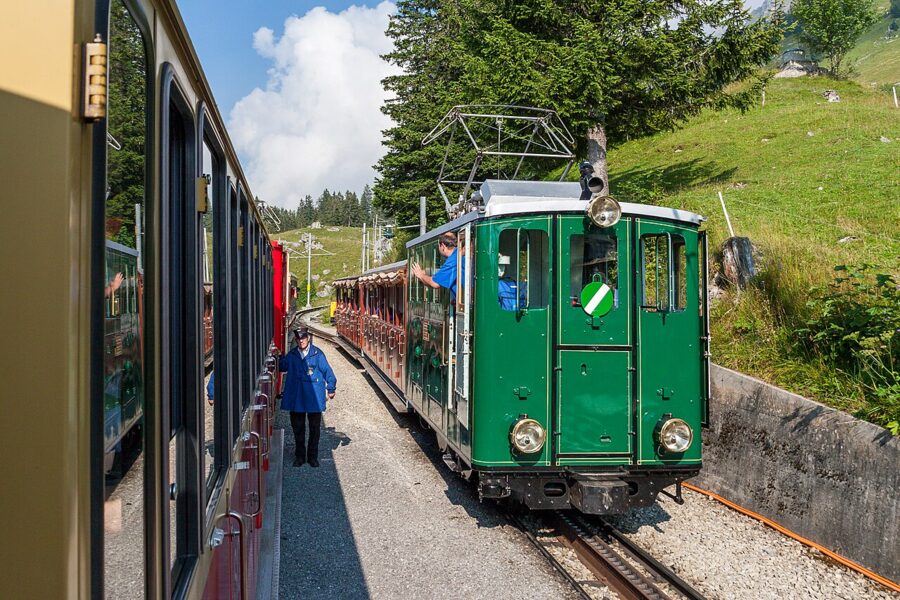


Allow half a day. Strong walkers can take the high route over the Faulhorn to Bachalpsee and Grindelwald-First, about six hours, and ride down to Grindelwald for the train home, but only when the forecast is settled.
The Lauterbrunnen valley: falls, Mürren and the Schilthorn
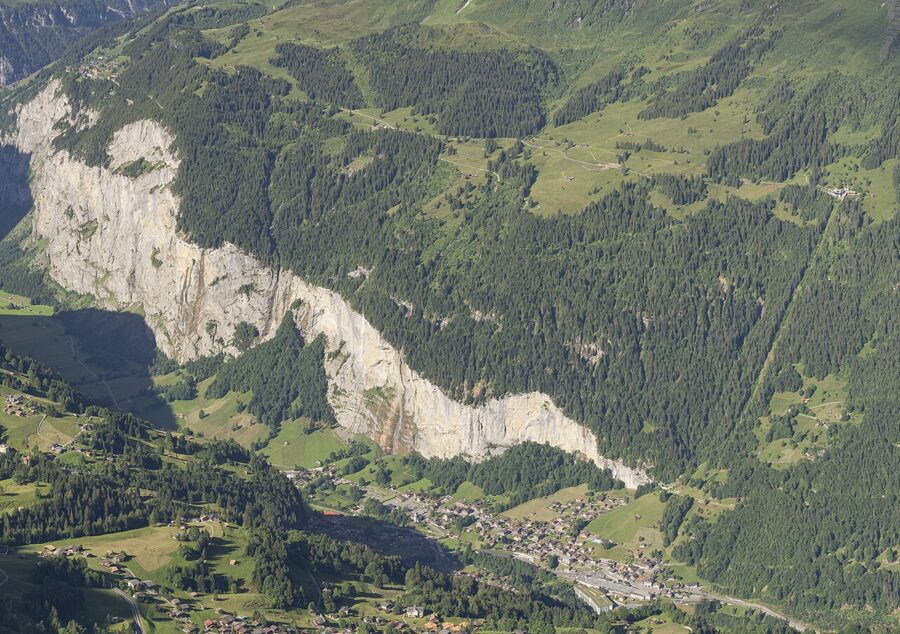
Lauterbrunnen sits at the bottom of a sheer-sided trough with 72 waterfalls, under half an hour by train from Interlaken Ost. Choose it on a day when the high summits are hidden: the falls are at their best after rain.
Staubbach Falls
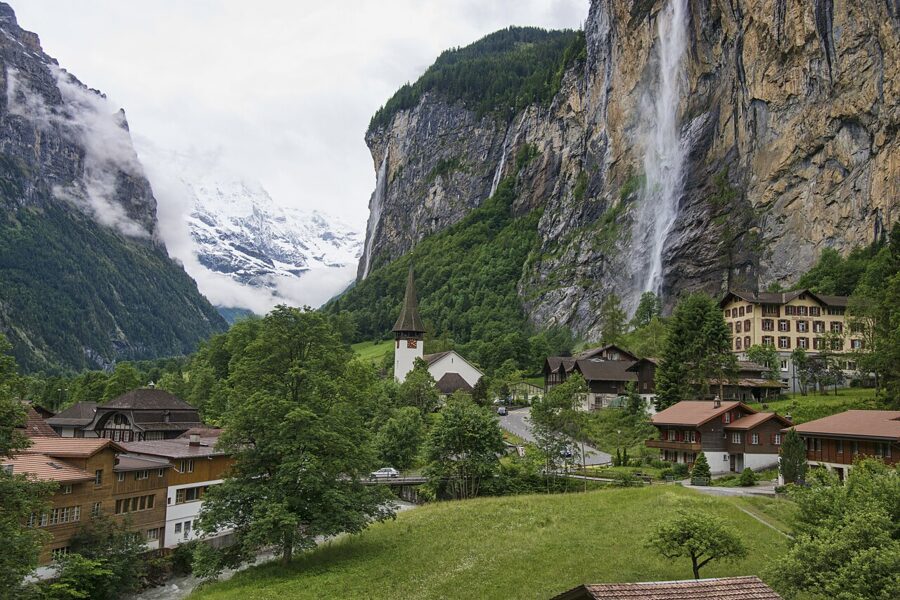
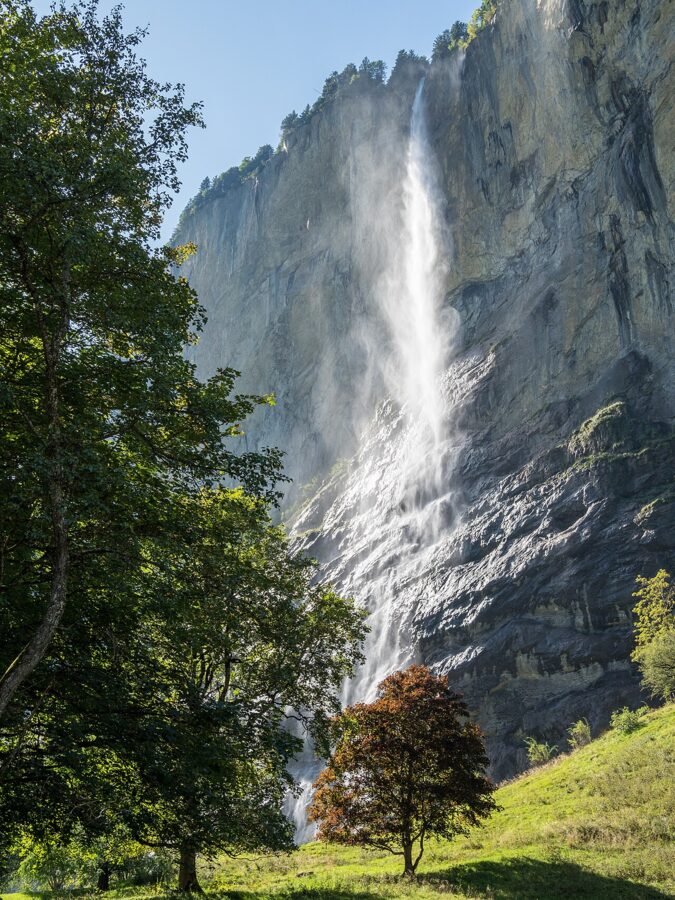
The Staubbach Falls drop about 297 metres in free fall from the cliff above the village, scattering into the spray that gave them their name (“Staub” is German for dust). They are a short walk from the station, and a path to their foot is open in summer only.

Trümmelbach Falls
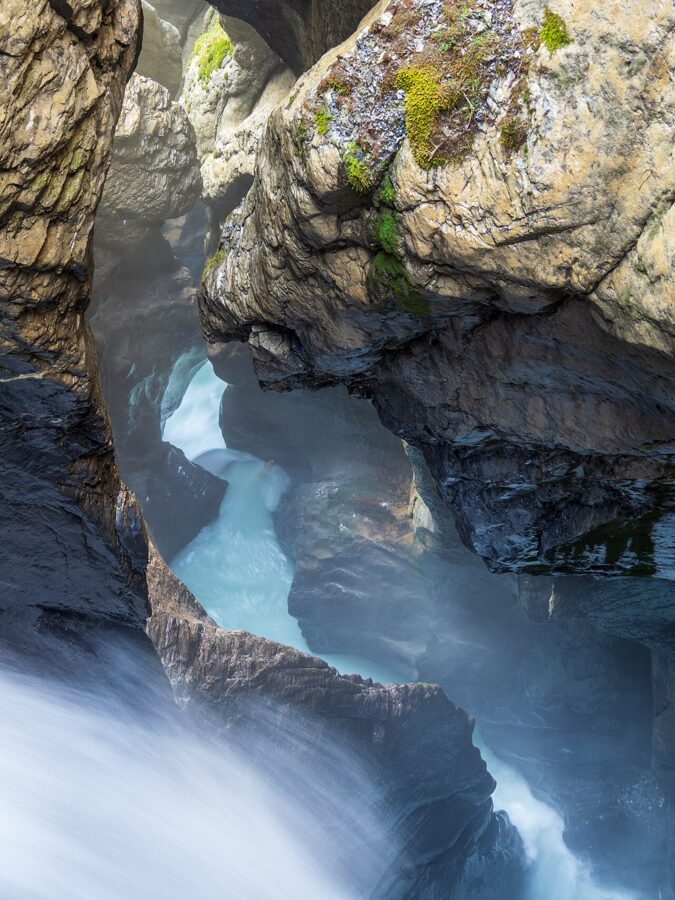
Three kilometres up the valley, the Trümmelbach Falls are ten glacier-fed waterfalls inside the mountain, reached by a tunnel lift. Up to 20,000 litres a second pour through from the glaciers of the Eiger, Mönch and Jungfrau. Admission is CHF 18 (about US$21), CHF 8 for children aged 6 to 15, and under-fours and dogs are not allowed in.
The falls open daily from early April to early November, 9am to 5pm, and 8.30am to 6pm in July and August. A PostBus runs from Lauterbrunnen station to the Trümmelbachfälle stop. Allow an hour and bring a waterproof.

Mürren and Gimmelwald
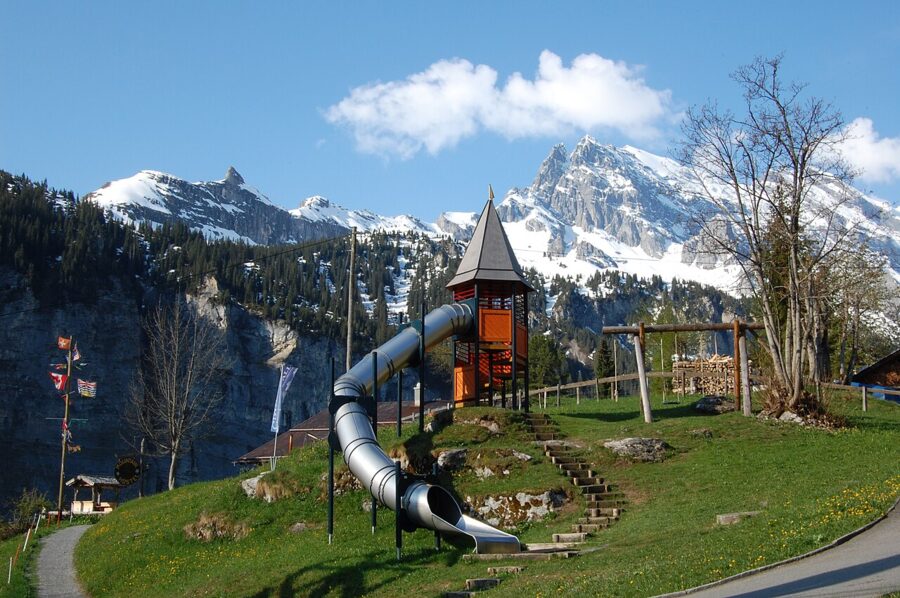
Mürren is a car-free village on a ledge about 775 metres above Stechelberg. From Lauterbrunnen a cableway climbs to Grütschalp, where a narrow-gauge train runs along the cliff edge to Mürren. From Stechelberg the new Schilthorn cableway takes about four minutes, at a gradient of up to 159.4%, which its operator calls the steepest cableway in the world. A return from Interlaken Ost to Mürren cost CHF 39.20 (about US$47) in summer 2026.

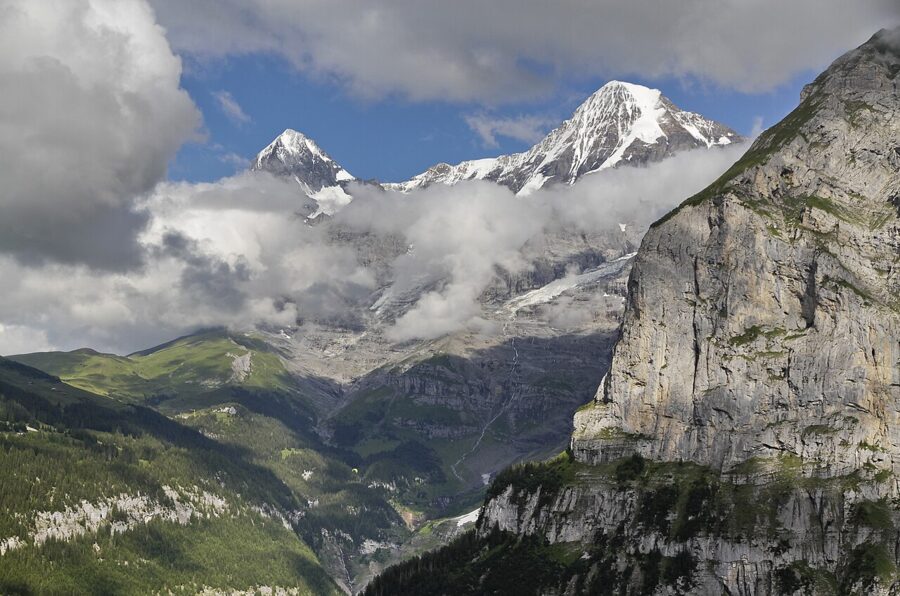

Go up one way and down the other, walking from Mürren to Gimmelwald, a tiny farming village on the next ledge, before taking the cableway to Stechelberg. That loop is the best half day in the valley for the money.

The Schilthorn
From Mürren the cableway continues via Birg, where the Thrill Walk is a steel walkway fixed to the cliff, to the Schilthorn at 2,970 metres and Piz Gloria, a restaurant that revolves once every 45 minutes. The Schilthorn fares for 2026 were CHF 115 (about US$137) return from Stechelberg and CHF 91.40 from Mürren, half with a Half Fare Card, CHF 45.70 with a Swiss Travel Pass, and free with the Berner Oberland Pass; the Jungfrau Travel Pass gives 20% off from Mürren.
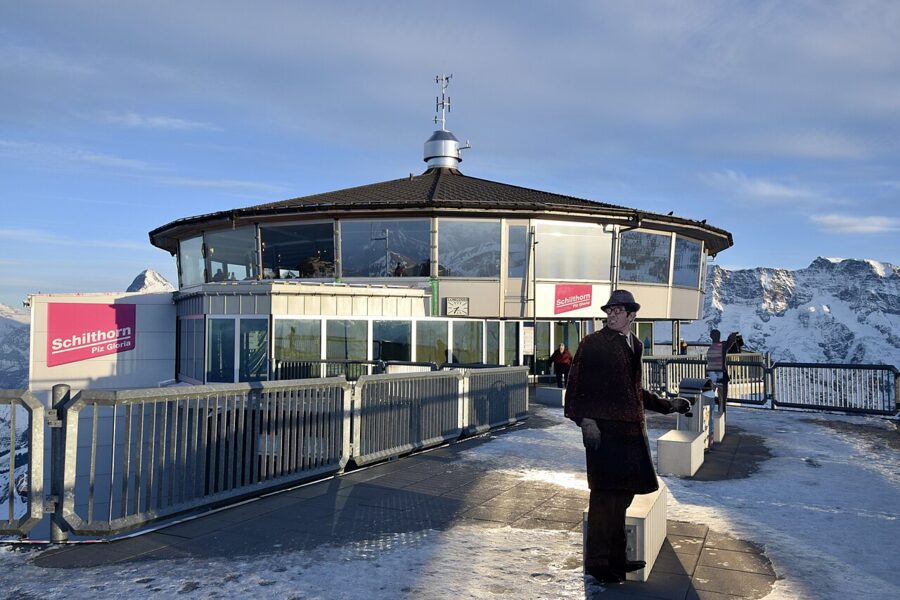

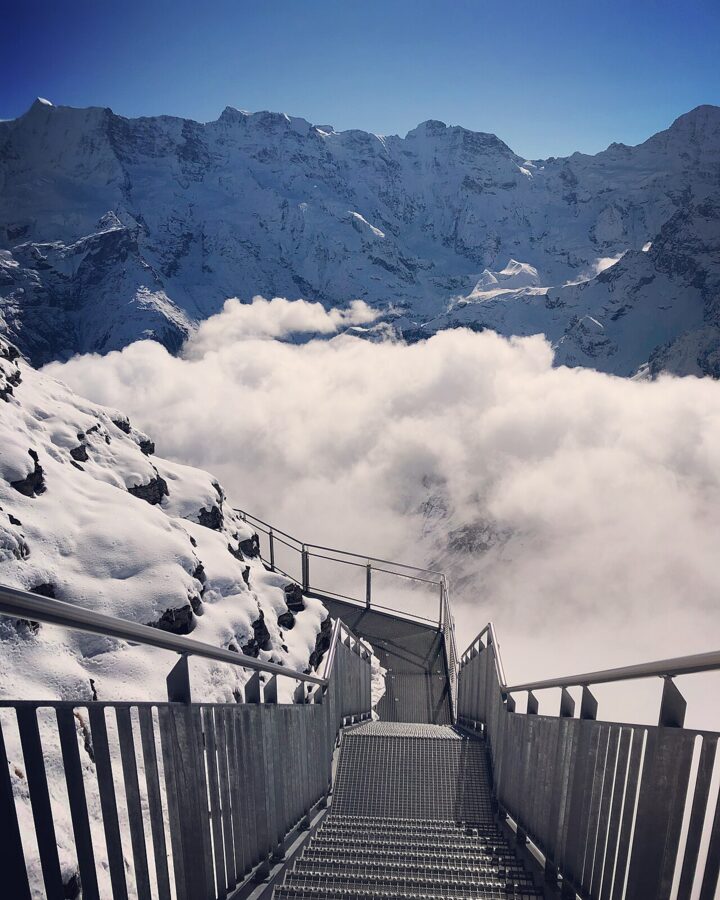

Choosing between the two summits, the Jungfraujoch wins for the glacier, the Schilthorn for the view of the Eiger, Mönch and Jungfrau together and for the price. With a Berner Oberland Pass the Schilthorn is effectively free.
Grindelwald: First, the Eiger and the gondolas
Grindelwald sits under the Eiger North Face, about half an hour from Interlaken Ost by train. Its two big excursions are the Eiger Express to the Jungfraujoch and the First gondola on the other side of the valley.
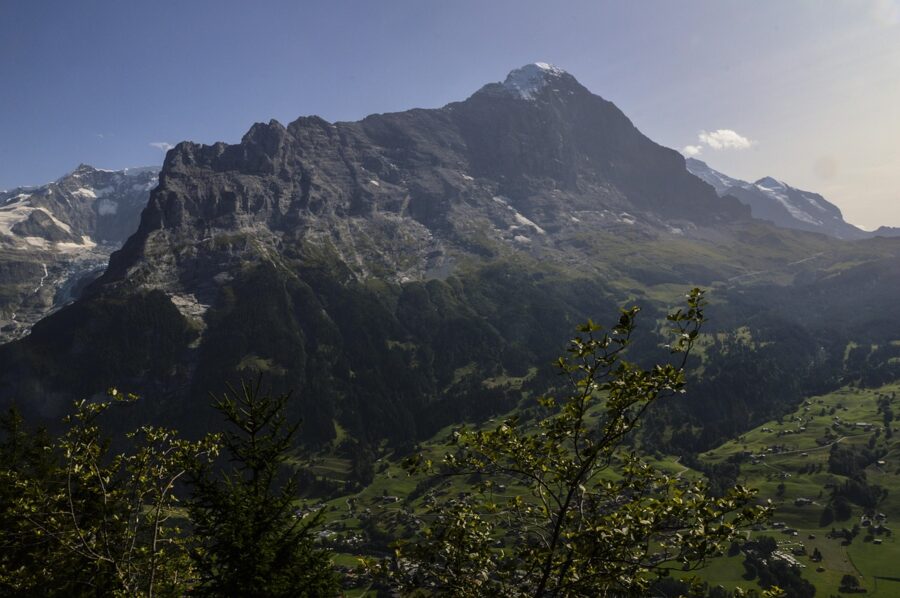
Grindelwald-First
The First gondola climbs from the village to 2,166 metres in about 25 minutes. A return cost CHF 76 (about US$90) in 2026, CHF 38 with a Half Fare Card or Swiss Travel Pass, and it is included in the Jungfrau Travel Pass. At the top the First Cliff Walk follows the rock face to a platform jutting 45 metres out over the drop; allow 20 minutes.
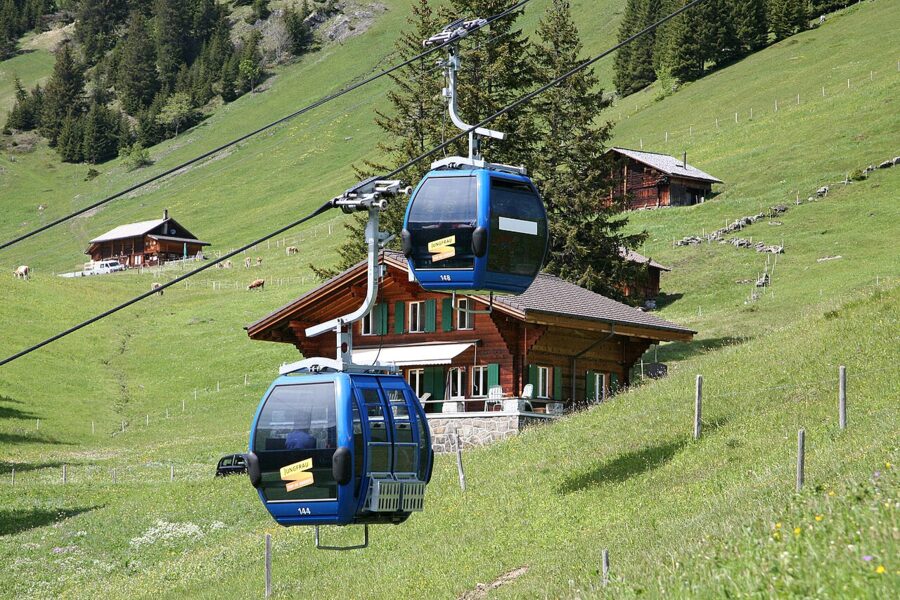

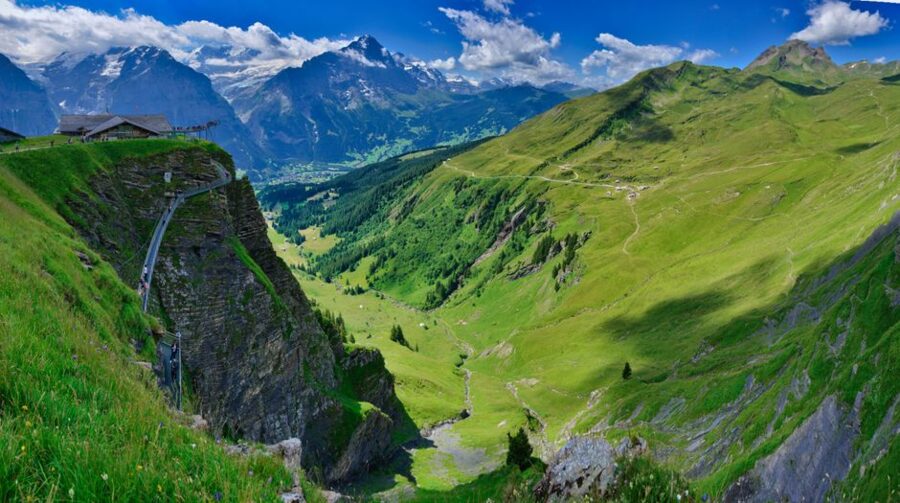
The rides cost extra. The First Flyer is an 800-metre zip line from First to Schreckfeld at up to 84 km/h, CHF 35 for adults and CHF 26 for children aged 6 to 15, for riders weighing 35 to 125 kg. The First Glider hauls you backwards up the slope and flies you down again, the Mountain Cart runs from Schreckfeld to Bort and the Trottibike scooter from Bort to the village; an Adventure Package from CHF 60 bundles two.
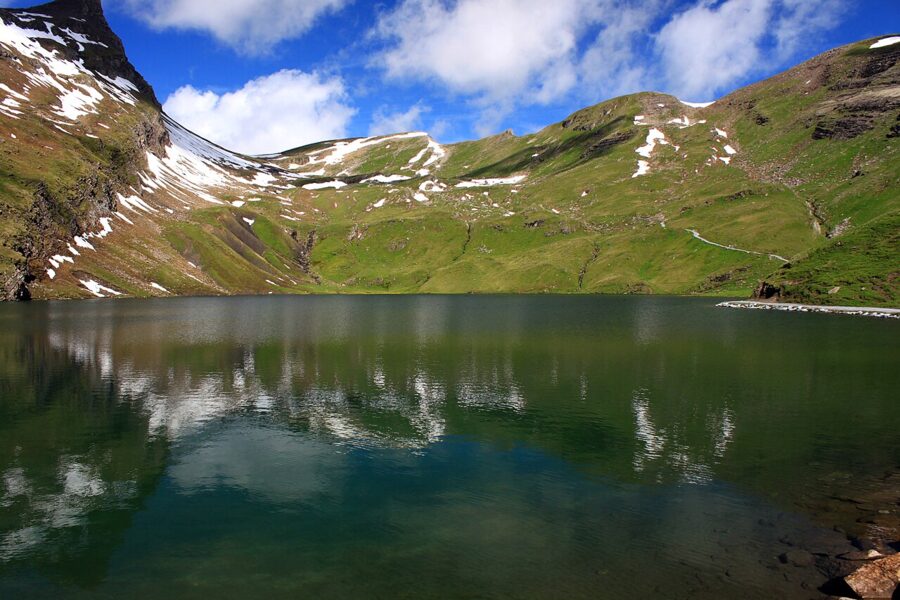
The walk to Bachalpsee is the reason I would come in summer even without the rides: under an hour each way on a well-kept path, with the Schreckhorn reflected in the lake on a still morning.

The Eiger Trail
From Eigergletscher station the Eiger Trail runs downhill along the foot of the North Face to Alpiglen in about two hours, where you pick up the train to Grindelwald. It pairs well with a Jungfraujoch day: come down from the summit early, walk, and ride the rest. Check that it is open before you set out.
Prices and times at a glance (as of 2026)
Adult return fares in second class, 2026. Where two full fares are given, the first is summer and the second the lower spring, autumn or winter rate.
| Attraction | From | Full fare (CHF) | Half Fare / Swiss Travel Pass (CHF) | Time to allow | Season |
|---|---|---|---|---|---|
| Jungfraujoch (plus CHF 10 seat, May to October) | Interlaken Ost | 271.20 / 225.60 | 140.60 / 189.60 (summer) | Full day | All year |
| Harder Kulm | Interlaken | 44 / 38 | 22 / 22 | 1–2 hours | Early April to late November |
| Schynige Platte | Wilderswil | 68 | 34 / 34 | Half day | Mid-June to late October |
| Grindelwald-First | Grindelwald | 76 | 38 / 38 | Half day | Most of the year; closed for maintenance in late autumn |
| Mürren | Interlaken Ost | 39.20 | 19.60 / free | Half day with Gimmelwald | All year; maintenance closures in autumn |
| Schilthorn | Mürren | 91.40 | 45.70 / 45.70 | 3–4 hours | All year; maintenance closures in autumn |
| Trümmelbach Falls (admission) | Lauterbrunnen | 18 | 18 / 18 | 1 hour | Early April to early November |
| St. Beatus Caves (admission) | Interlaken | 22 | 22 / 22 | 1.5 hours | All year |
| First Flyer | First | 35 | 35 / 35 | 15 minutes | Summer and winter |
Lake boats on both lakes are free with the Swiss Travel Pass and the Jungfrau Travel Pass and half price with the Half Fare Card. All pass prices here are 2026 tariffs, so recheck them for 2027 travel.
Two-day and three-day plans, by weather
Each plan assumes a Jungfrau Travel Pass and a base in Interlaken. Swap the days as the forecast changes; the only fixed rule is that the Jungfraujoch goes on the clearest morning.
Two days
- Clear day: first or second train to Grindelwald Terminal, Eiger Express and Jungfraujoch, down by early afternoon via the Eiger Trail or Kleine Scheidegg and Wengen. Harder Kulm for sunset.
- Cloudy or wet day: Staubbach and Trümmelbach in the morning, lunch in Lauterbrunnen, then the St. Beatus Caves or the Lake Brienz boat to Giessbach.
Three days
- Day one (clearest forecast): the Jungfraujoch by the Eiger Express, down via Kleine Scheidegg and Wengen to Lauterbrunnen, and Staubbach Falls on the way home.
- Day two (good or mixed weather): Grindelwald-First, the Cliff Walk and Bachalpsee, the First Flyer if you want it; Harder Kulm at sunset.
- Day three (any weather): Lauterbrunnen to Mürren via Grütschalp, walk down to Gimmelwald, cableway to Stechelberg, and Trümmelbach Falls on the bus back; from mid-June to October, swap in Schynige Platte if the morning is clear.
- If a day is a washout: the St. Beatus Caves in the morning and the Lake Thun boat to Oberhofen after lunch.
One day only
If the summit is clear, go up early and spend the late afternoon on Harder Kulm. If it is not, do Lauterbrunnen and Trümmelbach in the morning, the boat to Iseltwald after lunch, and Harder Kulm if the cloud lifts by evening.
That is the whole method: one clear morning for the high mountain, everything else fitted round it. Book the Jungfraujoch seat the night before, once you have seen the webcam.