
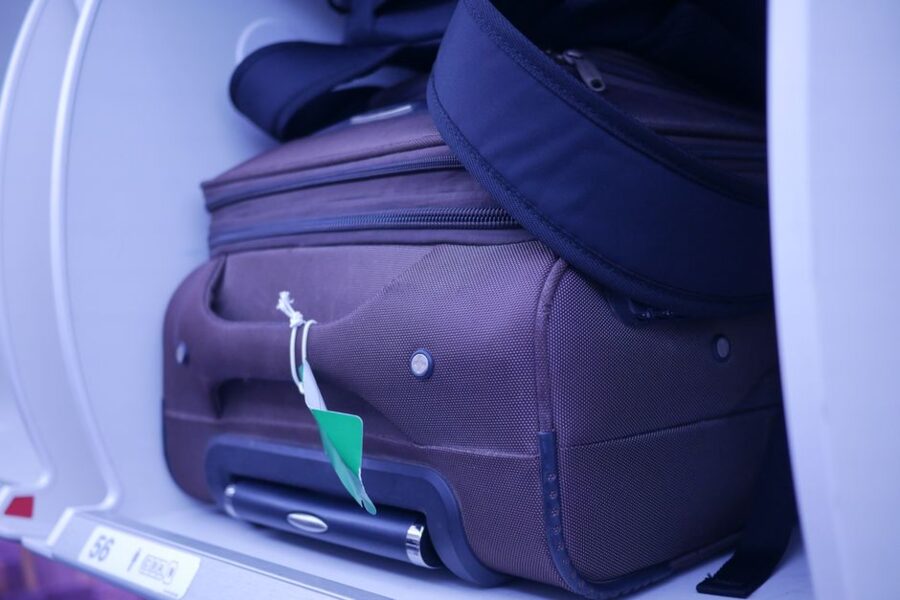
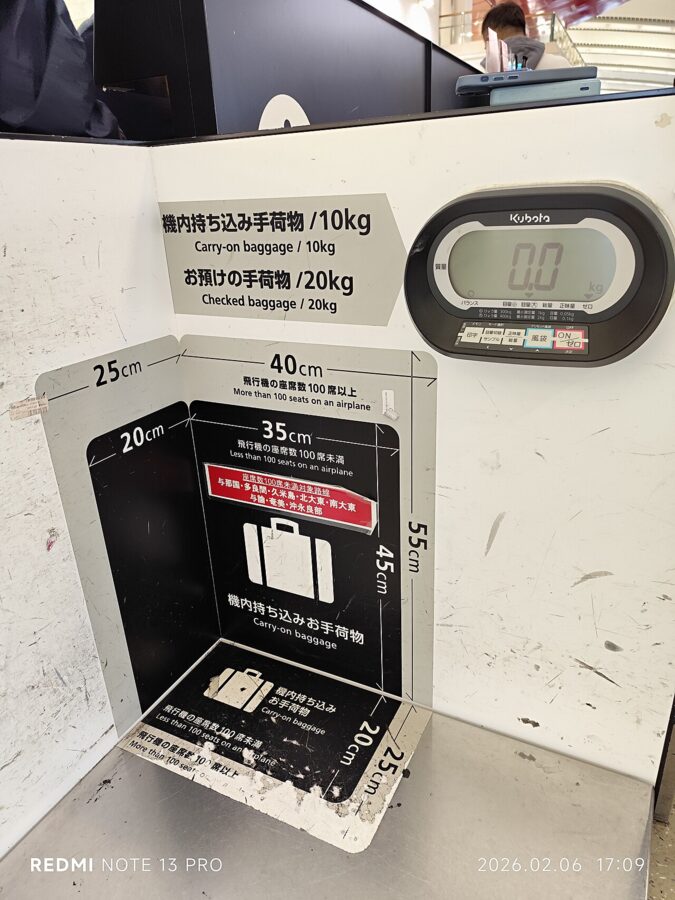
A carry-on allowance is a number on a website until someone at the gate lifts your bag into a metal frame. If it slides in, it flies with you for nothing. If it sticks, it goes in the hold, and on easyJet that costs £60 (about US$80) at the gate.
So plan the bag around three numbers before you pack a single shirt: the dimensions (wheels and handles included), the weight, and how many pieces the fare allows. Then check the rules that apply at security, which are set by airports and governments rather than airlines, and changed more in 2024 to 2026 than in the fifteen years before. Everything else, from packing cubes to a one-week list, comes after.
What your airline allows in 2026
There is no international standard for cabin bag size. Each airline sets its own, and the FAA’s carry-on guidance only notes that most airlines cap the bag at 45 linear inches (114 cm) and that some are stricter. The table below is what the airlines’ own baggage pages say as of November 2026, in economy, with dimensions in centimetres first.
| Airline | Free personal item (under the seat) | Cabin bag (overhead) | Weight | Watch for |
|---|---|---|---|---|
| American | 45 x 35 x 20 cm (18 x 14 x 8 in) | 56 x 36 x 23 cm (22 x 14 x 9 in) | No limit published | Batteries come out if the bag is checked at the gate |
| Delta | Must fit under the seat | 56 x 35 x 23 cm (22 x 14 x 9 in), 114 cm in total | No limit published | Delta Connection jets of 50 seats or fewer take personal items only in the cabin |
| United | 43 x 25 x 22 cm (17 x 10 x 9 in) | 56 x 35 x 23 cm (22 x 14 x 9 in) | No limit published | Basic Economy is personal item only on most routes |
| Southwest | Must fit under the seat | 61 x 41 x 25 cm (24 x 16 x 10 in) | No limit published | One power bank per passenger |
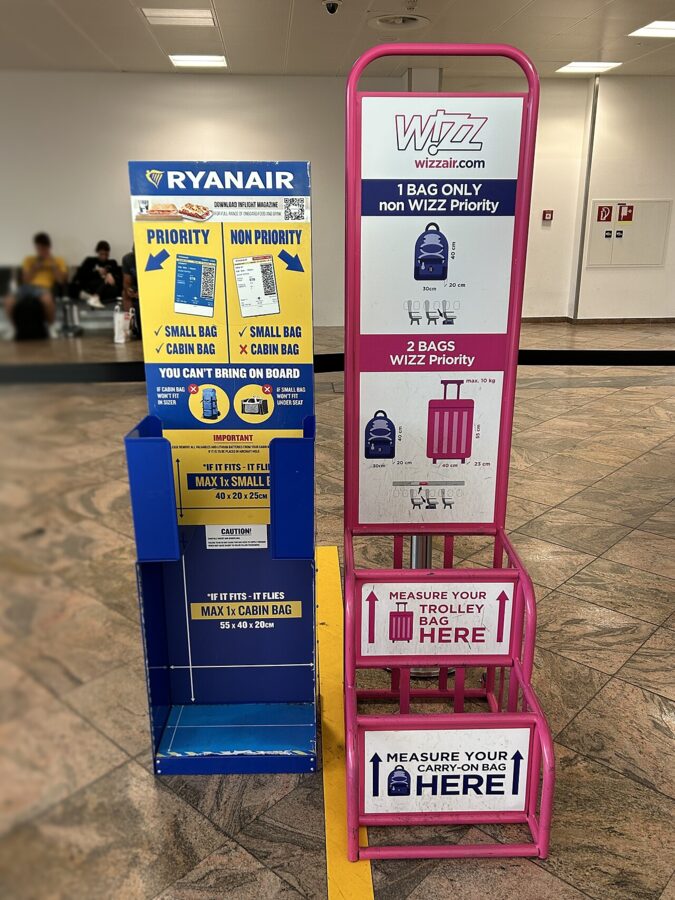
| Ryanair | 40 x 30 x 20 cm | 55 x 40 x 20 cm, only with Priority & 2 Cabin Bags | 10 kg (overhead bag) | Oversized bags refused or sent to the hold for a fee |
| easyJet | 45 x 36 x 20 cm | 56 x 45 x 25 cm, paid add-on or fare benefit | 15 kg each | A large cabin bag at the gate costs £60 |
| Wizz Air | 40 x 30 x 20 cm | 55 x 40 x 23 cm, only with Wizz Priority | Check at booking | Sizers stand at the gate |
| Emirates | Not listed separately | 55 x 38 x 22 cm | 7 kg (10 kg Premium Economy) | Departures from India: 115 cm in total |
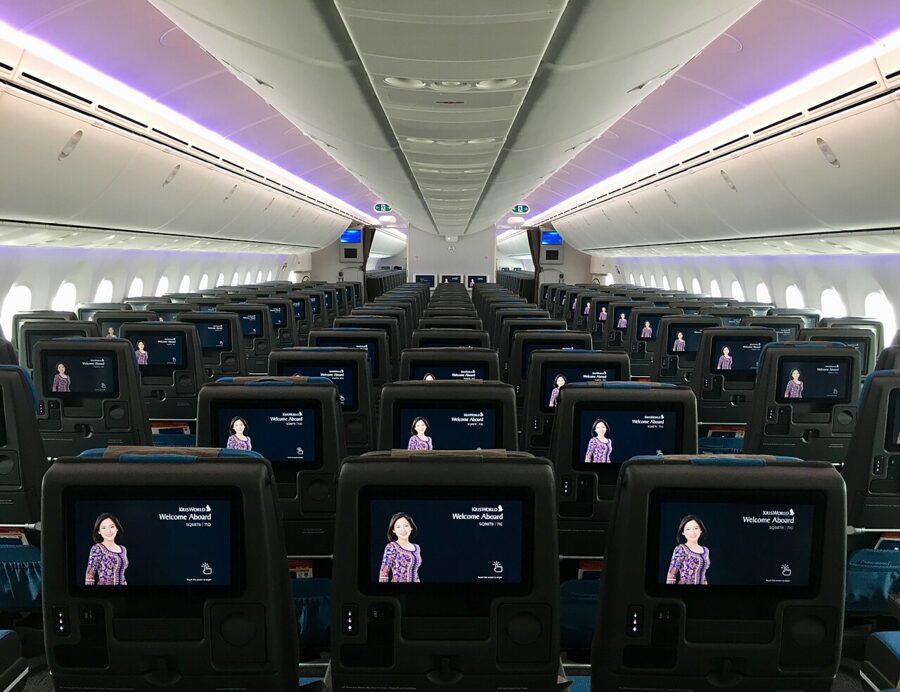
| Singapore Airlines | One extra item (handbag, laptop or camera bag) up to 40 x 30 x 10 cm | One piece, 115 cm in total (length + width + height) | 7 kg | Checked at check-in and again before boarding |
| Cathay Pacific | One small item (handbag, laptop bag, small backpack) | One piece | Varies by cabin and tier | Use the airline’s baggage calculator for your fare |
| Japan Airlines | Must fit under the seat | 55 x 40 x 25 cm, 115 cm in total | 10 kg for both items together | The 10 kg covers your handbag too |
| ANA | 40 x 30 x 20 cm | 55 x 40 x 25 cm, 115 cm in total | 10 kg for both items together | Personal item size set from 1 July 2026 |
Three patterns stand out. The US majors measure but rarely weigh, so a dense bag passes as long as it fits. The European low-cost carriers give everyone a small free bag and sell the overhead space, and they police it at the gate. Emirates, Singapore Airlines and the Japanese carriers are generous on size but hold you to 7 or 10 kg, and on Japan Airlines and ANA that weight includes the handbag.

Personal item versus cabin bag
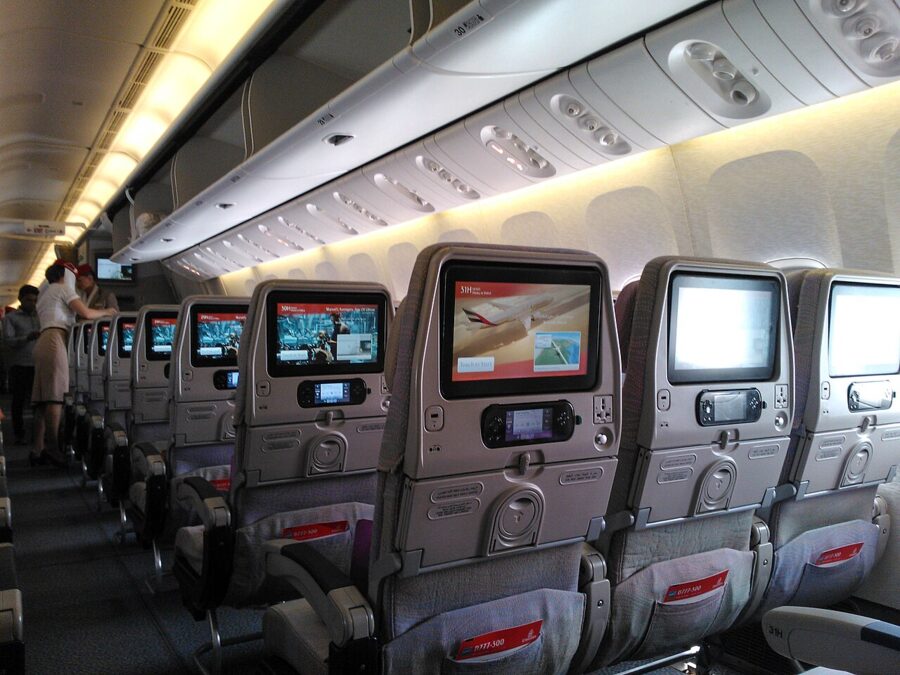
The personal item is the bag that lives under the seat in front of you: a handbag, a laptop bag, a small backpack. The cabin bag is the one that goes overhead. On a full-service fare you usually get both; on Ryanair, Wizz Air, easyJet and United Basic Economy the default fare is the personal item alone.
Some things do not count against either. easyJet lets you carry a coat, an umbrella and one standard bag of goods bought at the airport. United allows food bought at the airport, mobility aids, a car seat or stroller, and a nappy bag and breast pump even without the child. American does not count a nappy bag (one per child) or medical devices.
United also says plainly that a small purse in addition to your two items is not allowed, which is where a lot of gate arguments start.
The EU free personal item, as it stands
The revised EU air passenger rights regulation was published in the EU’s Official Journal on 2 October 2026 and is reported to apply from 23 October 2027. It guarantees one free personal item that fits under the seat, at least 40 x 30 x 15 cm. Airlines can still sell cheaper fares without a larger cabin bag.
Reports differ on the second bag. Some describe a 7 kg, 100 cm overhead bag in the base fare, subject to cabin space; others say the 7 kg cap was dropped from the final text. easyJet has said UK passengers would only get the free item on return flights from the EU, not on outbound flights from the UK. None of it changes anything before late 2027, so book to today’s allowance.
Liquids: 100 ml, 2 litres, and the airport you leave from
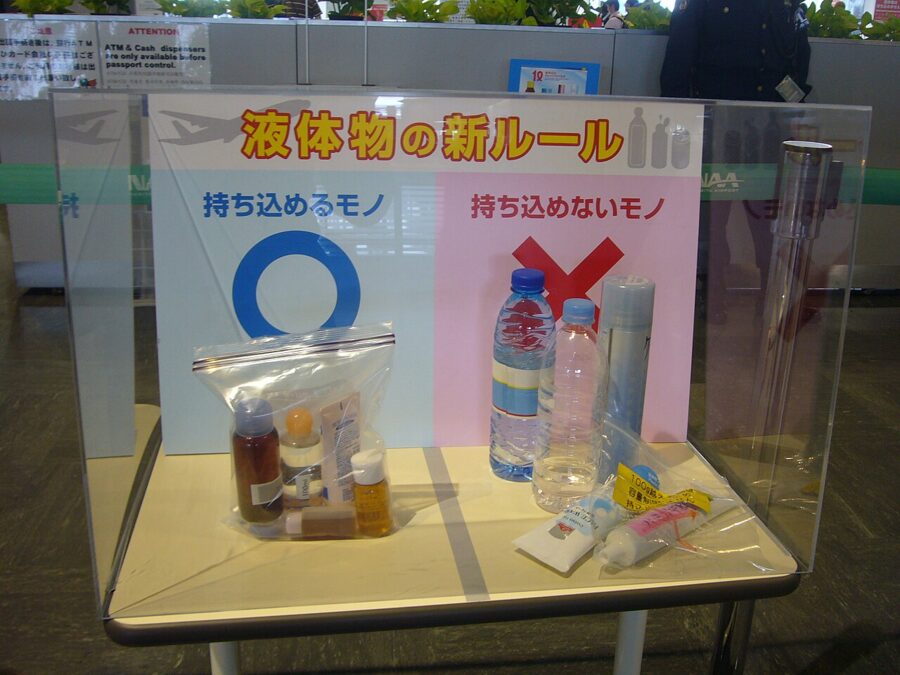
The 100 ml rule dates from 2006, after a plot to bring down transatlantic flights with liquid explosives. It is a security rule, not an airline rule, so it changes with the airport rather than the ticket. Since 2024 that has made it the least predictable part of packing a carry-on.

United States
The TSA’s 3-1-1 rule is unchanged as of November 2026: containers of 3.4 oz (100 ml) or less, all in one quart-sized bag. Larger containers go in checked baggage. Medications and food for infants and children are exempt, and anything that alarms gets a second look.
How many 3 oz bottles can you bring? As many as fit in the one bag with the seal closed. Some US checkpoints with newer scanners let you leave the bag inside your carry-on, but the container limit is the same in every lane.
United Kingdom
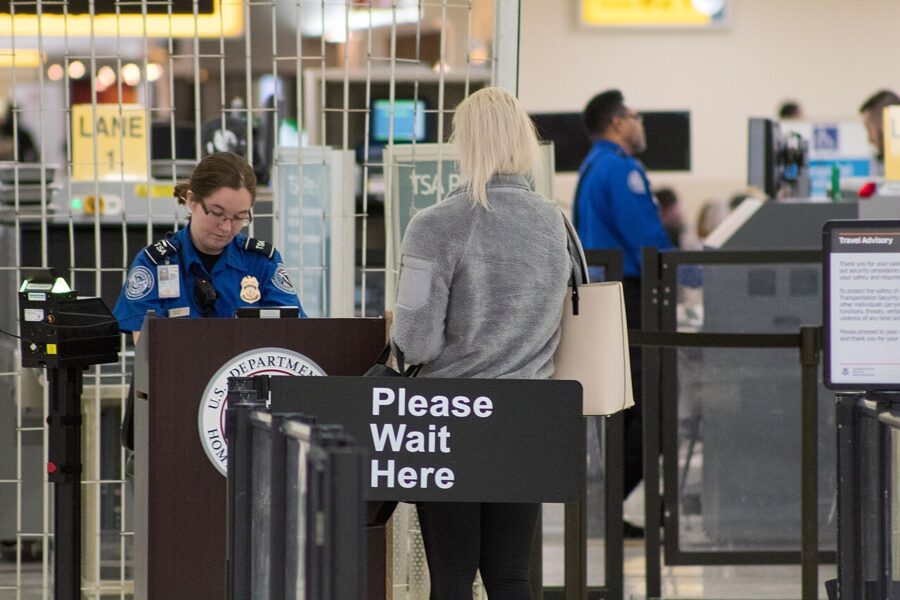
The UK government’s liquids rules now say the limit depends on the airport. At most it is still 100 ml per container in one resealable bag of about 20 x 20 cm, holding no more than a litre, one per person. Airports with the new CT scanners can allow containers up to 2 litres.
As of early 2026 the 2-litre airports were Heathrow (all terminals), Gatwick, Edinburgh, Birmingham, Bristol, Belfast International and Belfast City. Manchester and Luton still applied 100 ml. At Stansted, London City and Luton the liquids could stay in your bag, but the 100 ml container limit still held. This list has already reversed once: in June 2024 the government sent six airports that had relaxed the rule back to 100 ml.
Toothpaste counts as a liquid everywhere; so do mascara, lip gloss, contact lens solution, jam and honey. Empty your vacuum flask before security, because the new scanners cannot see through the insulation.

European Union
Several EU airports dropped the limit with the new scanners, then had it put back: from 1 September 2024 the European Commission reimposed 100 ml at airports using that equipment, citing a technical issue rather than a new threat. In July 2025 the restriction was lifted for approved scanners, and airports have been switching lane by lane since.
By January 2026, 2-litre lanes were running at Dublin, Prague Terminal 2, Vilnius, Kaunas, Kraków, Poznań, Cluj, Billund, Malta, Rome Fiumicino, Milan Linate and Bologna, and at some checkpoints in Munich, Frankfurt and Berlin. Paris, Marseille, Madrid, Lisbon, Athens and Brussels were still at 100 ml.
The practical rule follows from all this. Pack your liquids to the strictest airport on the whole trip, including the flight home and any connection, because a 2-litre bottle that sailed through Gatwick will be binned in Madrid.
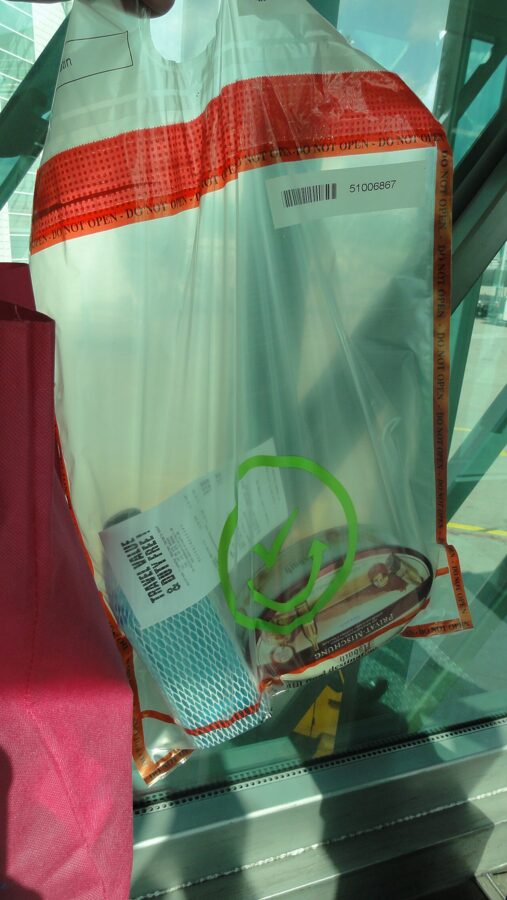

Duty-free liquids are the exception everywhere, on conditions. In the UK they must stay in the sealed security bag with the receipt visible until you reach your final destination. Flying into the US and connecting, the TSA accepts duty-free liquids over 3.4 oz only in a tamper-evident bag sealed by the shop, with a receipt showing purchase within 48 hours, and still suggests putting them in checked baggage.

Batteries and power banks
Power banks changed more than anything else in the bag this year. On 27 March 2026 new ICAO power bank restrictions took effect for international flights: no more than two per passenger, and no recharging them on board. The UK Civil Aviation Authority’s summary adds that a power bank should not be used to charge other devices on board either.
The size limits did not change. Up to 100 Wh needs no permission; 100 to 160 Wh needs the airline’s approval; above that, it does not fly. Spare batteries and power banks go in the cabin only, with the terminals protected, and the TSA bans power banks from checked bags outright.
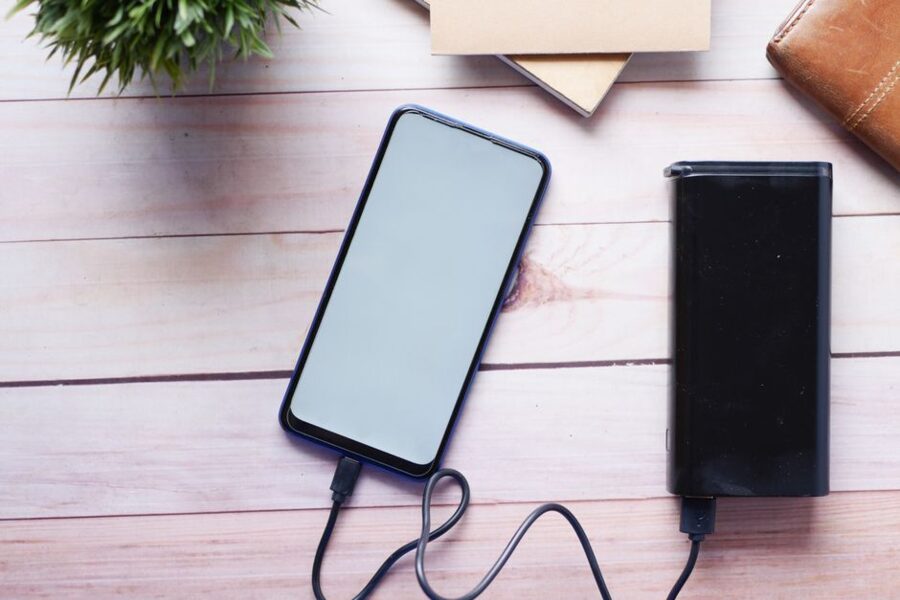
To find the rating, multiply the voltage by the amp-hours. A typical 20,000 mAh bank at 3.7 V is 74 Wh, comfortably inside the limit; around 27,000 mAh is where you reach 100 Wh. Newer banks print the figure on the casing, and the FAA’s PackSafe page for lithium batteries gives the same formula.
Airlines can be stricter, and many are. Southwest’s battery rules allow one power bank per customer from 20 April 2026, not charged from the seat power, and kept visible while in use. The Lufthansa Group airlines (including SWISS, Austrian, Brussels Airlines and Eurowings) banned using power banks on board in January 2026, and Emirates allows one, with no use in flight. IATA’s dangerous goods rules take up the ICAO changes from 1 January 2027, so expect the stragglers to follow.
Medicines, knives and tools
Medicines
Put medicines in the personal item, never the overhead bag, because the overhead bag is the one that gets taken off you at a full gate. The TSA exempts medications from the 3-1-1 limit; tell the officer at the start of screening. In the UK, essential liquid medicines over 100 ml are allowed at every airport, but carry proof such as a letter from your doctor or a copy of the prescription.
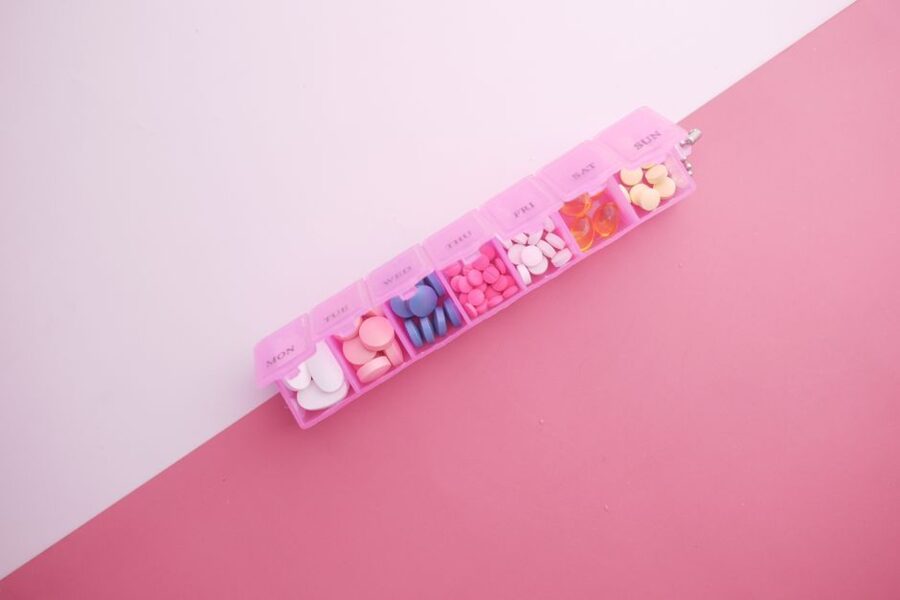
Medicine that needs to stay cold is its own problem. Emirates, for one, will not put personal medication in the galley chillers; it asks for a medically approved insulated pouch, and the crew will give you ice on request.
Knives, scissors and tools
In the US, the TSA bans knives from the cabin except round-bladed butter knives and plastic cutlery. Scissors are allowed if the blades are less than 4 inches from the pivot.
The UK hand luggage rules draw the line at 6 cm. Small scissors with blades up to 6 cm and disposable razors are fine in hand luggage; knives with a sharp or pointed blade or one longer than 6 cm are not, and neither are tools with a blade or shaft over 6 cm. You can carry one lighter, in a clear plastic bag on your person, and nothing like pepper spray in either bag.
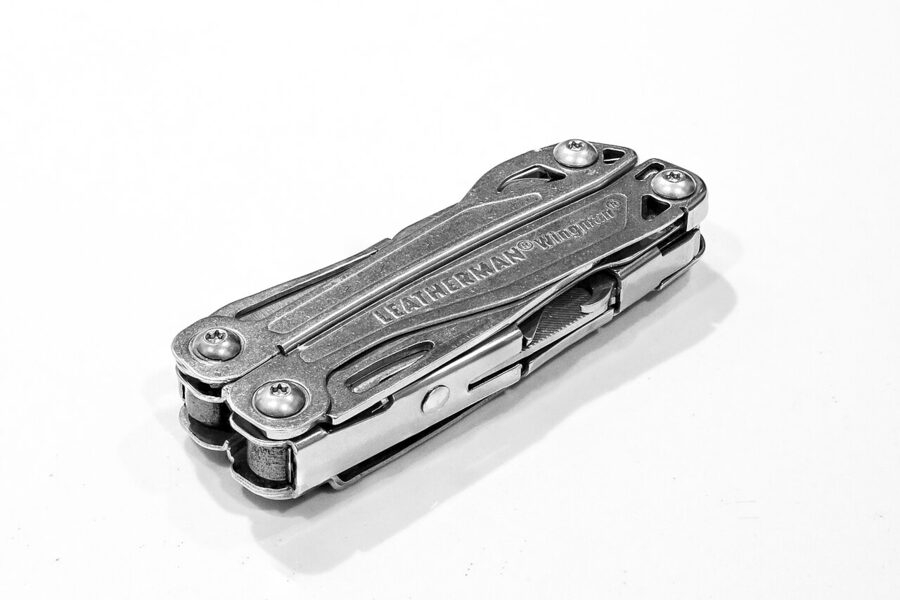

Security staff on both sides of the Atlantic have the last word: an item that is normally allowed can still be refused if they consider it dangerous. If losing it would ruin the trip, it goes in the hold.
Choosing the bag and the personal item
Buy the bag for the strictest airline you fly, not the one you fly most. The numbers make it easier than it looks: a 55 x 35 x 20 cm cabin bag fits every overhead allowance in the table above, from Ryanair’s 55 x 40 x 20 cm to Emirates’ 55 x 38 x 22 cm and the US majors’ 22 x 14 x 9 inches.
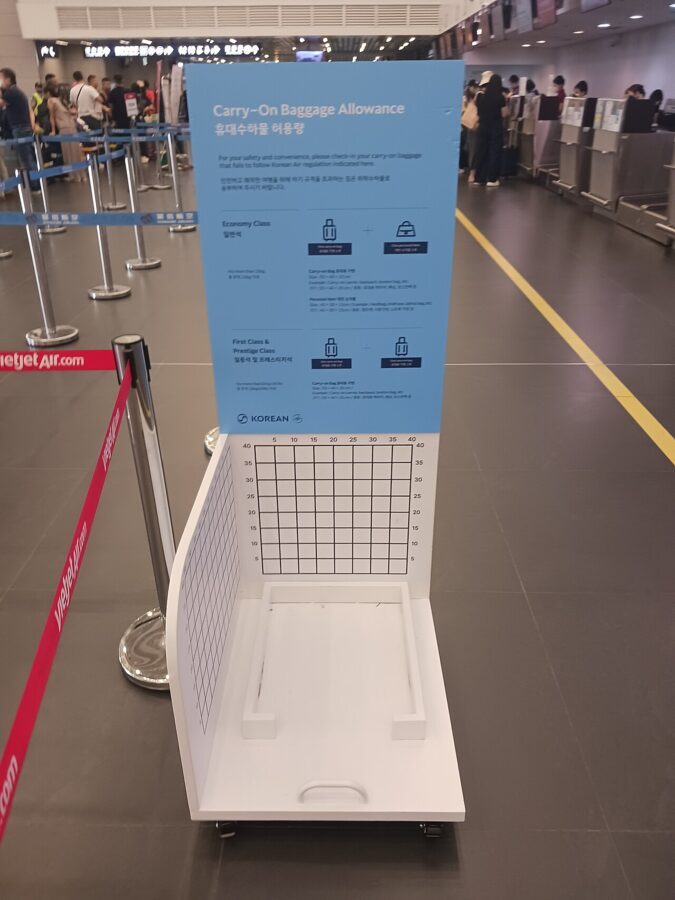
The personal item is trickier, because United’s is narrow and the Europeans’ is wide. A 40 x 25 x 20 cm bag clears both United’s 43 x 25 x 22 cm and the 40 x 30 x 20 cm of Ryanair, Wizz Air and ANA. The EU’s coming minimum of 40 x 30 x 15 cm will not fit United’s, so do not assume one bag works everywhere just because it says “personal item” on the label.
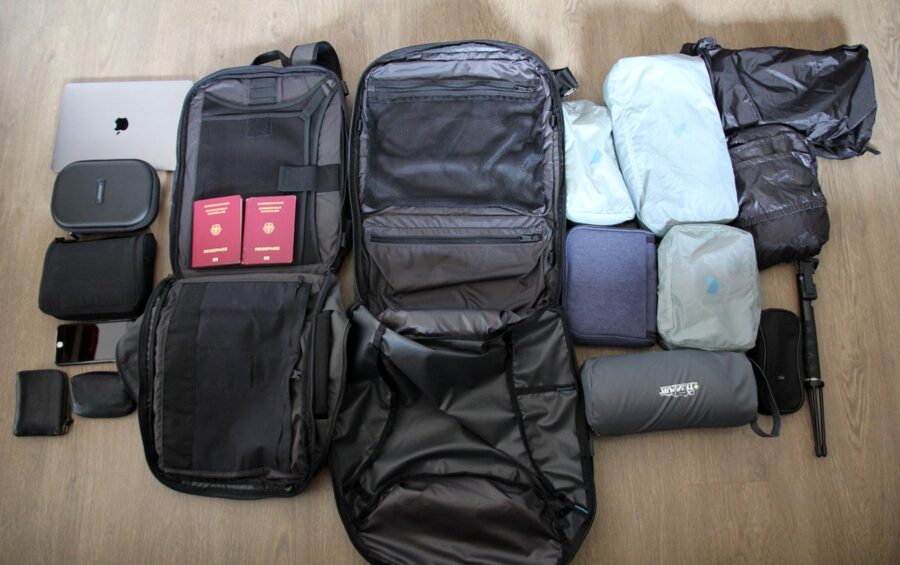
Then look at the bag’s own weight. Where the allowance is 7 kg, a 3 kg four-wheel case leaves you 4 kg for everything else; a 1 kg soft bag leaves 6. Wheels and handles count in the dimensions on every airline above, and spinner wheels take a few centimetres of length you could have packed. I would take a two-wheel case or a soft backpack for Europe and Asia, and save the heavy hard-shell for US domestic flights, where nobody weighs it.

Packing method
Start with a list, then cut it
Write the list from the itinerary, day by day, not from the wardrobe. Every item should be worn at least twice or be essential once (a swimsuit, a formal shirt). Lay it all out, then take a third of the clothes back; the bag never needs what you added “just in case”.
Rolling, folding and cubes
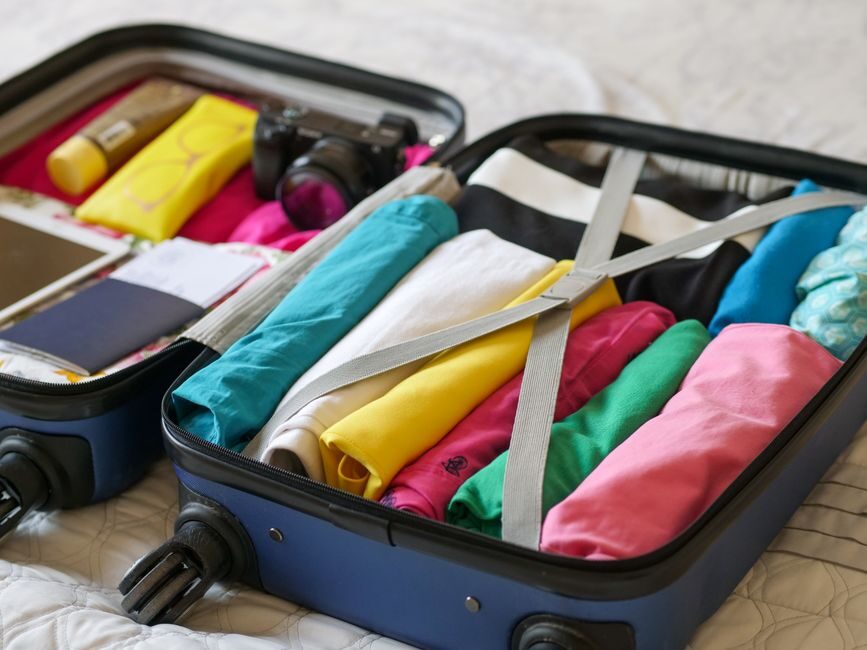
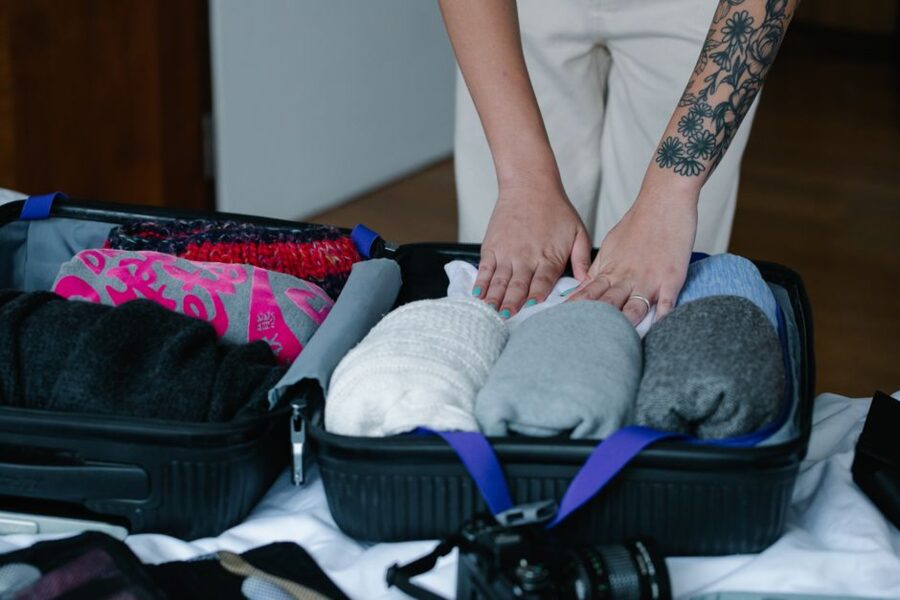
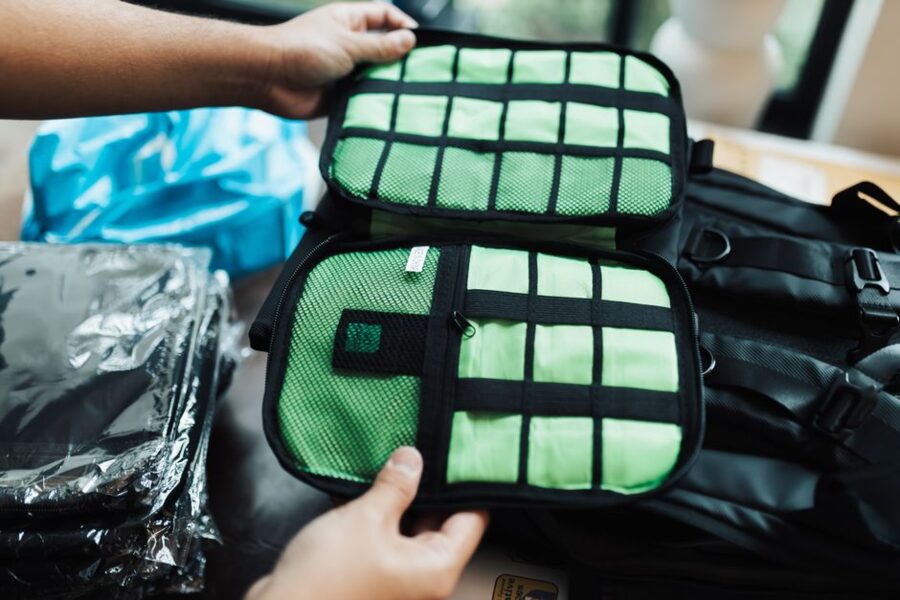
Roll soft things (T-shirts, underwear, knitwear) and fold stiff ones (shirts, trousers) flat on top so they do not crease. Packing cubes do not create space; they compress soft clothes a little and, more usefully, stop the bag turning into a heap on the second day. Use two or three: one for tops, one for underwear and socks, one for anything worn.
Layering and what to wear on the plane
The heaviest things travel on you: boots, jeans, the jacket with full pockets. easyJet lists an overcoat among the extras you can carry on top of your allowance, and Singapore Airlines does too, which is why the jacket with zip pockets is the oldest trick in carry-on travel. Pack in layers within the bag too: shoes and heavy items at the wheel end, so the case stands without tipping, and the liquids bag on top where you can lift it out.
The personal item is the first-hour bag
Pack the under-seat bag as if the cabin bag could disappear, because at a full gate it can. Medicines, passport, phone, power bank, chargers, glasses, keys and one change of underwear go in it; so does anything valuable or fragile.
A one-week carry-on packing list
This fits a 55 x 35 x 20 cm cabin bag and a small personal item, for a week in mild weather with one laundry stop. It also works as the base for a Mediterranean cruise, with one smarter outfit swapped in, or for a mountain week around Interlaken, with a warm layer added.
- Worn on the plane: jeans or trousers, T-shirt, jumper or fleece, light waterproof jacket, walking shoes.
- Tops: four T-shirts or tops, one shirt that works for dinner.
- Bottoms: one pair of trousers or a skirt, one pair of shorts or a second skirt for warm days.
- Underwear and socks: four sets, washed once midweek.
- Sleep and swim: sleepwear, a swimsuit, a thin scarf that doubles as a cover-up.
- Shoes: one light second pair (sandals or trainers); the heavy pair is on your feet.
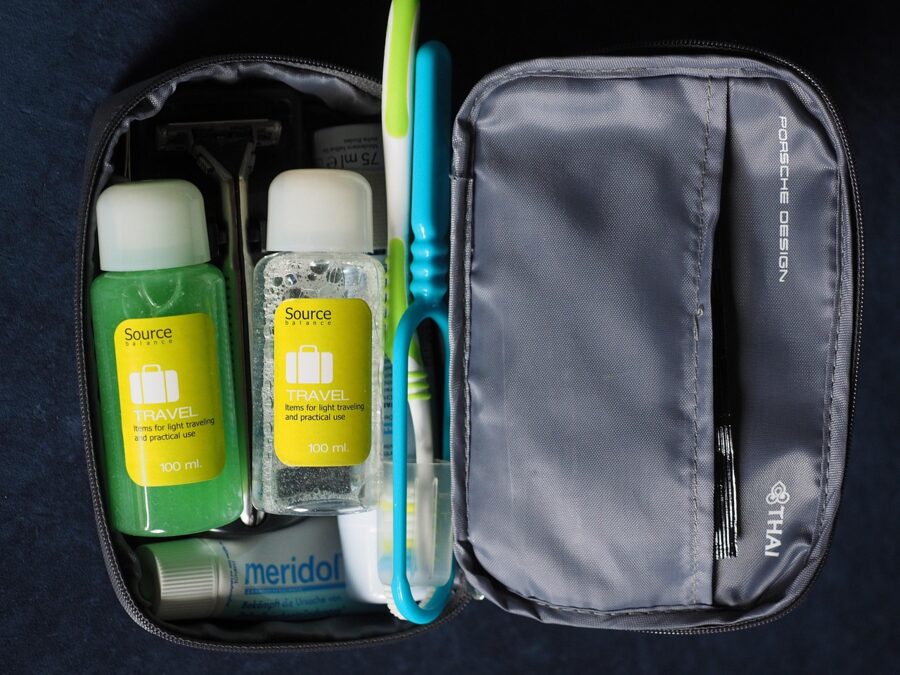
- Liquids bag: toothpaste, shampoo, deodorant, sunscreen, contact lens solution, each 100 ml or less.
- Dry toiletries: toothbrush, razor (disposable or cartridge), solid soap, plasters.
- Personal item: passport, cards, phone, one power bank under 100 Wh, charger and cables, plug adapter, glasses, medicines with proof, earplugs, a pen.
- Laundry: a few sachets of travel wash and a bag for worn clothes.
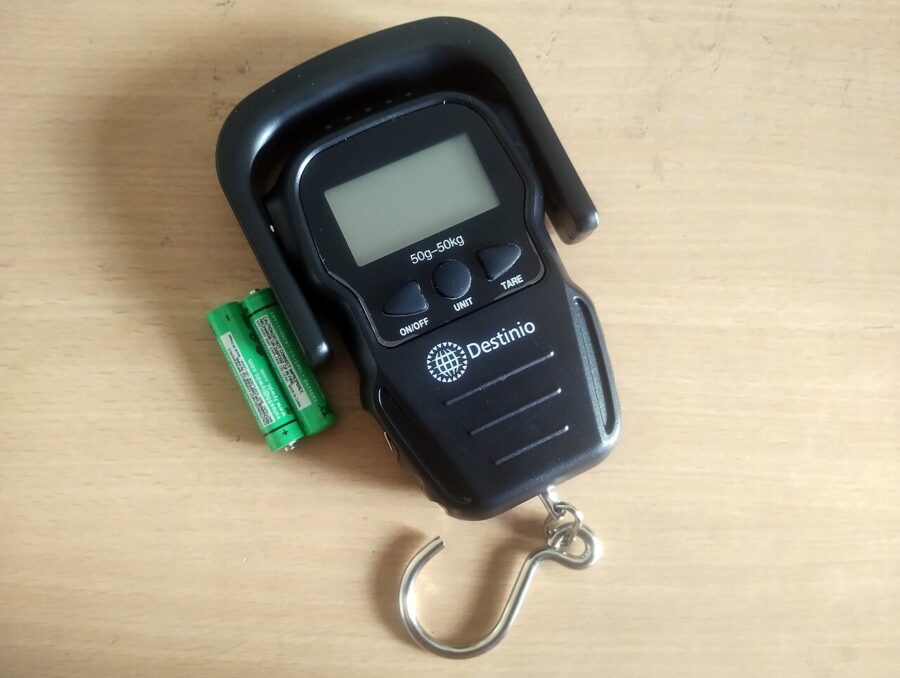
Weigh it at home. If the airline allows 7 kg, stop at 6.5, because airport scales and your bathroom scales rarely agree.

At the airport: weighing, gate checks and full bins
Where bags get measured
Singapore Airlines checks cabin bags at check-in and again before boarding, and anything over the limit goes in the hold. The European low-cost carriers check at the gate, where Ryanair refuses bags that do not fit its sizers or puts them in the hold for a fee, and easyJet charges £60 for a large cabin bag not booked in advance. easyJet’s app has a camera tool that sizes your bag at home, though the airline itself says a tape measure is more reliable.
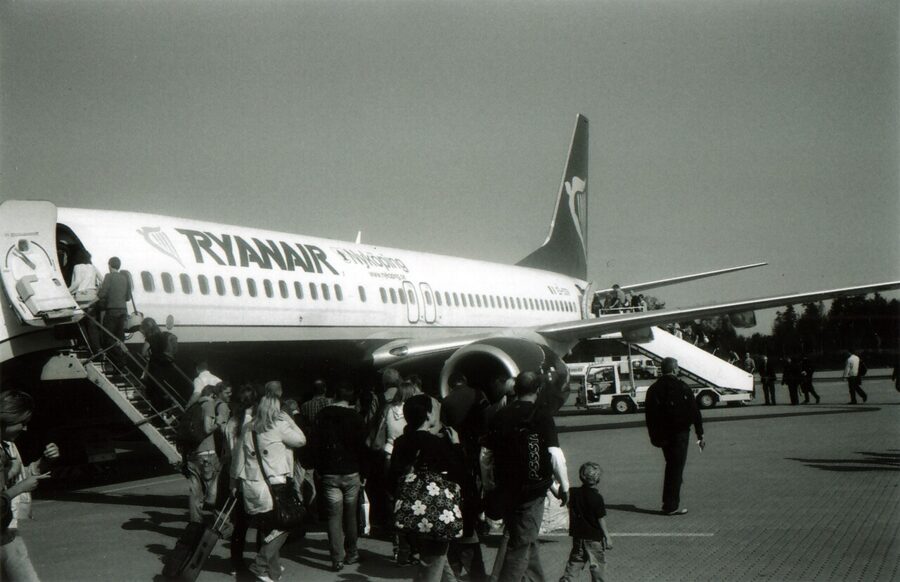

What happens if your carry-on is an inch too big? On a US major, often nothing, until the flight is full and the agent starts checking the sizer. On Ryanair and easyJet, it goes in the hold and you pay. The inch you saved is never worth it.
Gate checks
On crowded flights Delta gate-checks some carry-ons free of charge, with a pink tag, and returns them when you get off. United checks anything over the size limit or beyond your two items, and you may pay a fee for it. On Delta Connection jets with 50 seats or fewer, anything larger than a personal item gets the pink tag at the aircraft and comes back to you when you get off.
Before you hand a bag over, take out the power banks, spare batteries and e-cigarettes. The FAA requires spare lithium batteries to stay in the cabin with you, even when the bag goes below at the gate or planeside. Medicines, keys, passport and anything fragile should come out too, which is easy if they were in the personal item all along.
When the overhead bins are full
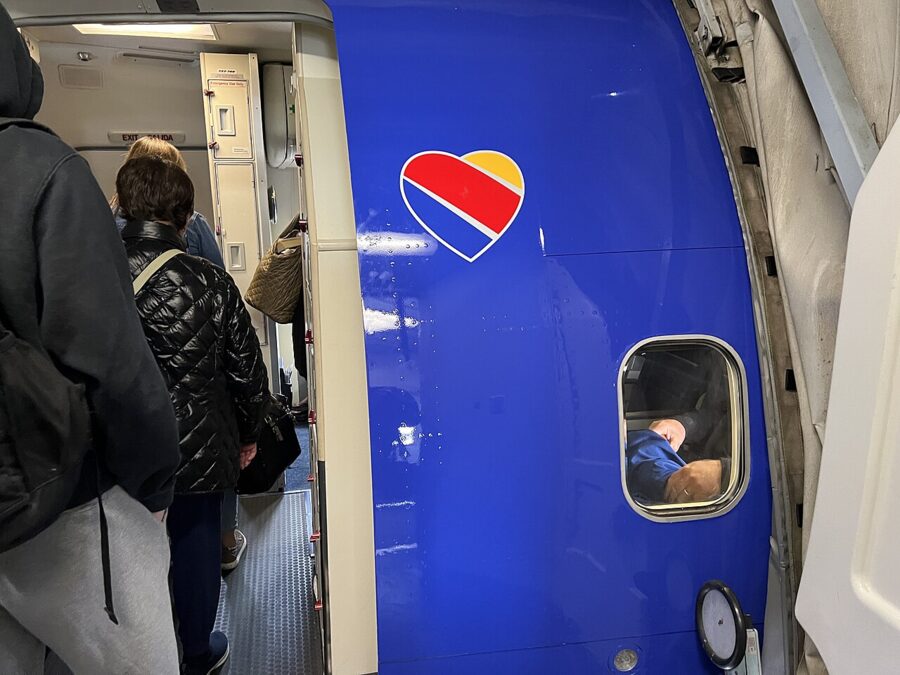
Board as early as your fare allows; on Ryanair and easyJet the overhead bag comes with priority boarding for exactly this reason. Put your bag in the bin above or behind your row, not in front of it, so you are not swimming upstream at the other end. Put your personal item under the seat, not in the bin.
Do not expect the crew to lift it for you. Delta’s flight attendants do not proactively help put bags in the bins, with certain exceptions, and Emirates forbids bags behind your legs, in the aisle or in front of an emergency exit. If there is no space left, accept the gate tag early; the people who argue at row 30 are the ones whose bags go last into the hold.
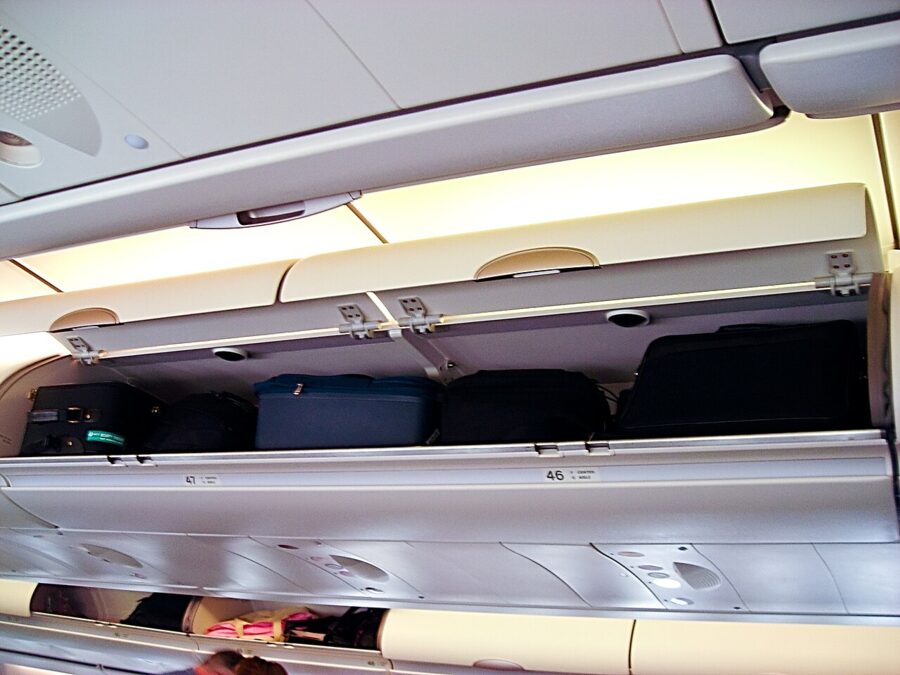
Heavy items belong under the seat, not overhead, where they can fall on someone when the bin opens. And in an evacuation, leave the bag on the plane.
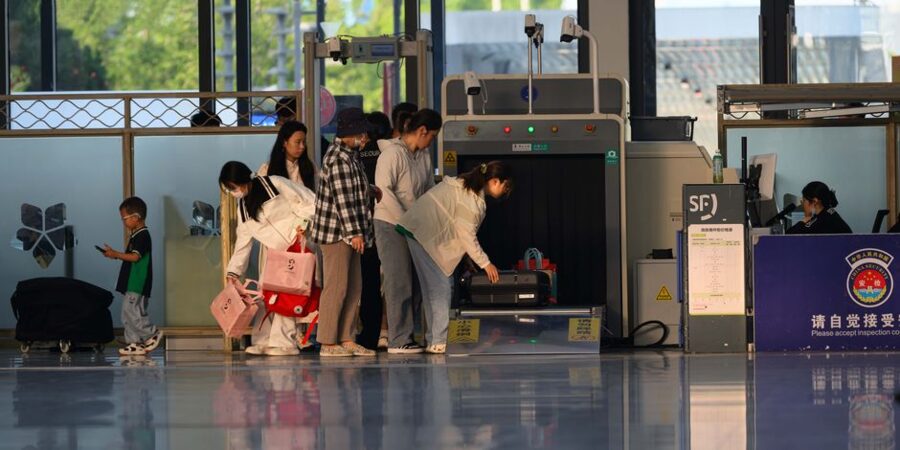
Check the three numbers, pack to the strictest airport on the trip, and keep the essentials under the seat. Then the moment the gate agent picks up your bag is just the moment the bag slides into the frame.