
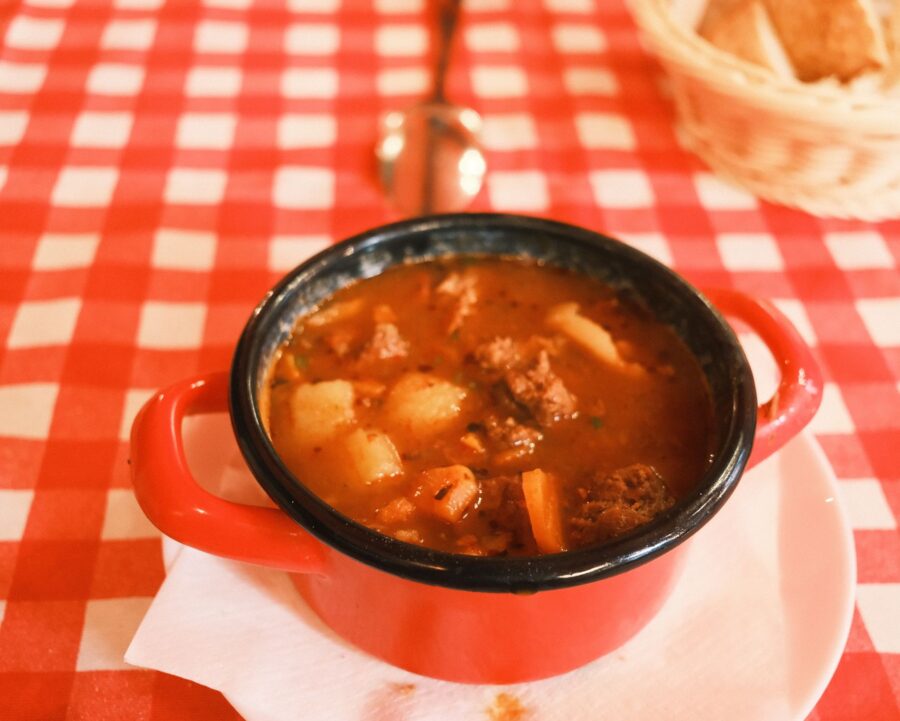
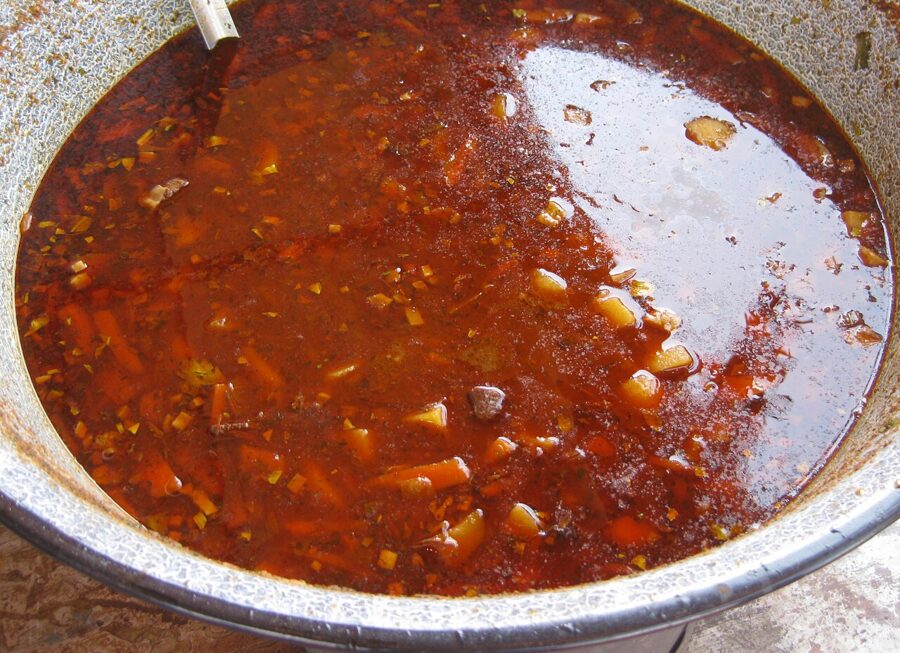
Order gulyás in Budapest and a bowl of soup arrives: thin, brick red, with cubes of beef and potato and little pinched noodles floating in it. The thick beef stew the rest of the world calls goulash is pörkölt here. Knowing that is the first of a dozen small decisions that decide whether you eat well in this city or merely expensively.
Hungarian cooking runs on onions softened in lard, a lot of ground paprika and a spoon of sour cream. It is cheap at lunchtime and dear in the evening by the river. Plan around the market in the morning, a canteen at midday and a coffee house in the afternoon.

The decisions that matter, and where people go wrong
These are the calls I would make before the first meal.
- Eat your big meal at lunch. Canteens and many bistros sell a fixed napi menü (daily menu) of soup and a main on weekdays, typically between 11am and 3pm. In 2026 that costs 2,000–3,000 Ft (about US$6–9) in places locals use.
- Read the bill for a service charge. Restaurants may add a felszolgálási díj (service charge) of up to 15%. If it is there, you have already tipped.
- Treat Váci utca and the riverbank terraces as views, not dinners. The same gulyás costs noticeably less a few streets inland, and the cooking is usually better.
- Go to the coffee houses for cake, not lunch. You pay for the room, so order what it is famous for.
- Ask for gulyás as a main, pörkölt if you want stew. Order goulash expecting a stew and you will get a soup, correctly.
The paprika dishes
Hungary’s national dishes took shape in the 19th century, when ground paprika moved from peasant pots into city restaurants. Four words cover most of the menu: gulyás, pörkölt, paprikás and halászlé.
Gulyás, and why it is a soup
A gulya is a herd of cattle, and a gulyás is the herdsman who drove it across the Great Plain. The meat he cooked in a kettle over an open fire took his name. City kitchens turned it into gulyásleves, goulash soup, and in Hungary the word now means the soup.
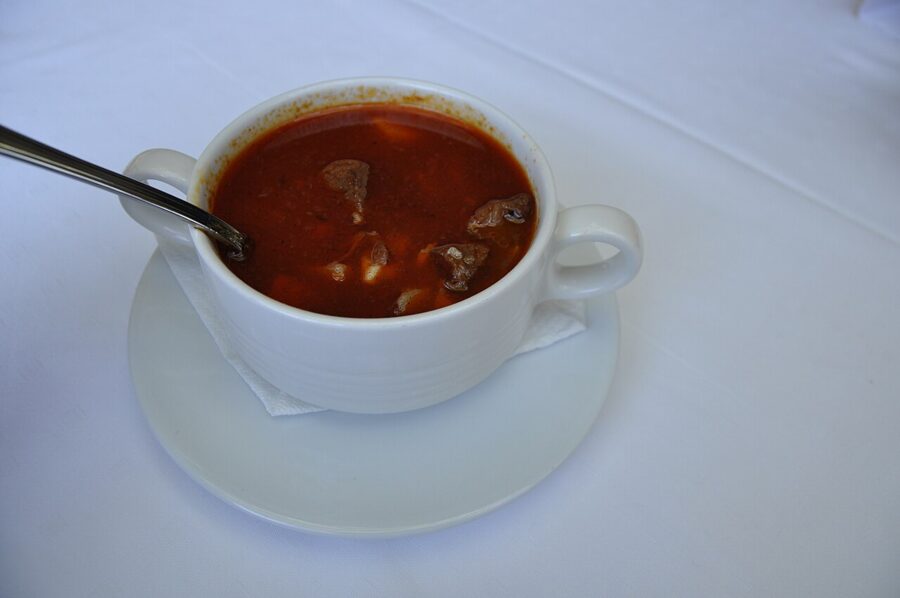

The restaurateur Károly Gundel defined it as a soupy dish with plenty of liquid, onion and paprika, cubed potato and csipetke, the pinched egg noodles. Hungarian goulash soup has been a Hungarikum, one of the country’s officially listed national treasures, since 2017, and the listing makes one rule clear: a proper gulyásleves has no flour roux. If yours is thick enough to stand a spoon in, someone has cut a corner.
Expect to pay 3,590 Ft (about US$11) for gulyásleves with csipetke at Menza on Liszt Ferenc tér, and 5,900 Ft (about US$17) at Stand25, a bistro that counts its gulyás among its signature dishes (both as of November 2026). Babgulyás, the bean version, turns up on canteen daily menus and is worth having once.

Pörkölt and paprikás
Pörkölt is the dish you probably mean by goulash: meat braised slowly in onion, paprika and very little liquid until the sauce clings. Beef (marhapörkölt) and pork are standard, served with nokedli or galuska, small soft dumplings. Menza’s red-wine beef pörkölt with galuska is 5,390 Ft as of November 2026.
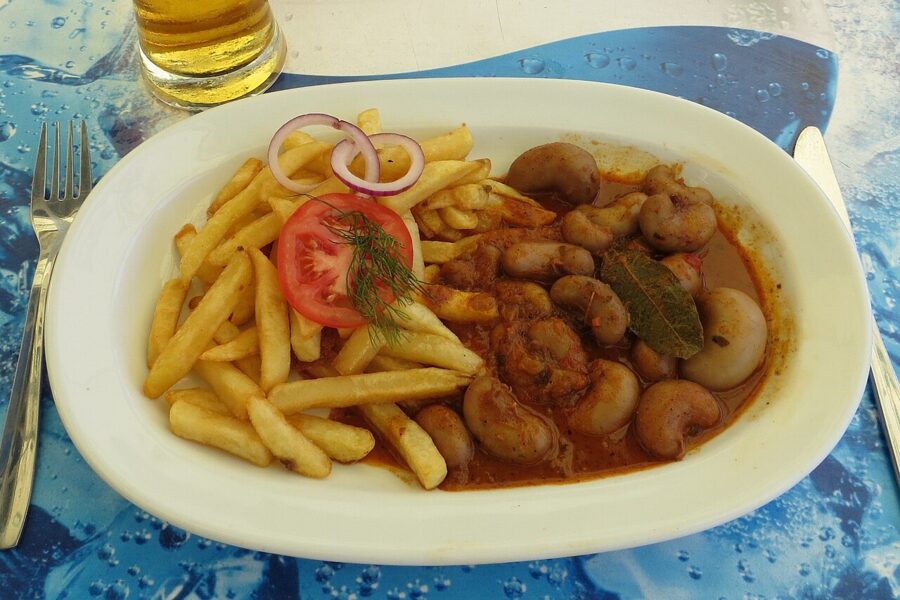

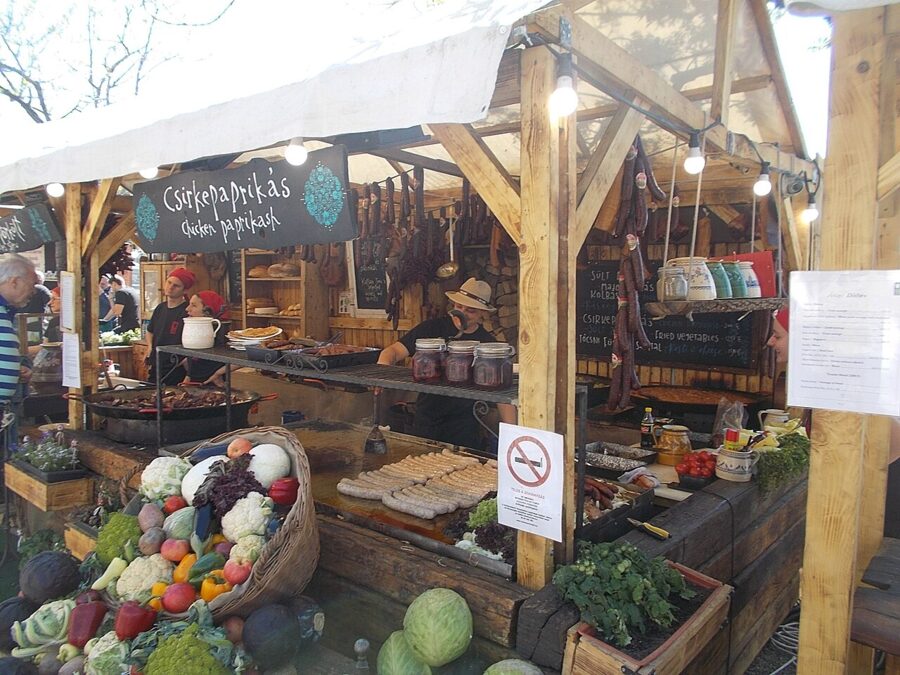
Paprikás is pörkölt finished with sour cream, which turns the sauce orange and soft. It suits paler meat: paprikás csirke (chicken) is the one everybody knows, and harcsapaprikás, made with catfish, is the version I would choose in a better restaurant. Stand25 serves its catfish paprikás with sheep’s cheese sztrapacska dumplings for 9,900 Ft (about US$29).

Halászlé, the fisherman’s soup
Halászlé is river fish, usually carp with catfish or pike, cooked down with onion and a great deal of paprika until the broth turns deep red and fiery. Hungary lists two versions as Hungarikums: Bajai halászlé from Baja on the Danube and Tiszai halászlé from the Tisza. The Szeged style on the Tisza passes the cooked fish through a sieve into the broth; the Baja style keeps it in pieces.
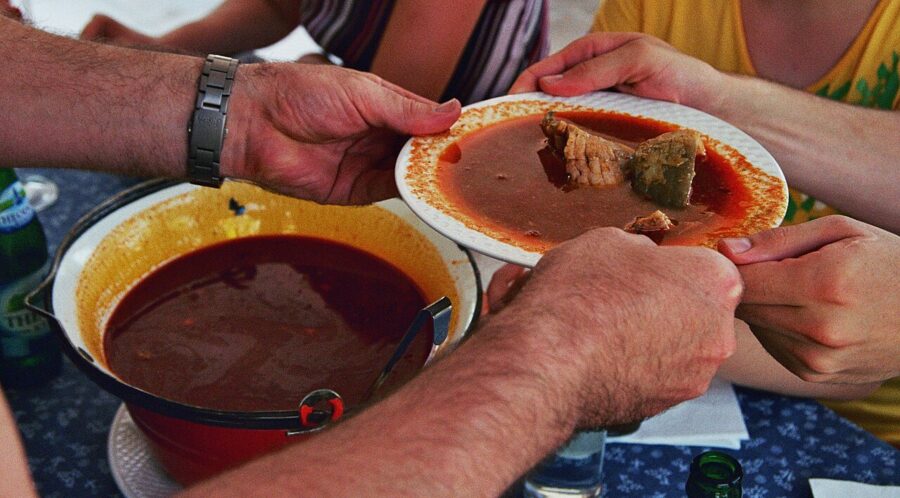

It is the Christmas Eve dish in many Hungarian homes. Carp has small bones, so eat slowly, or order a cup as a starter.
Töltött káposzta
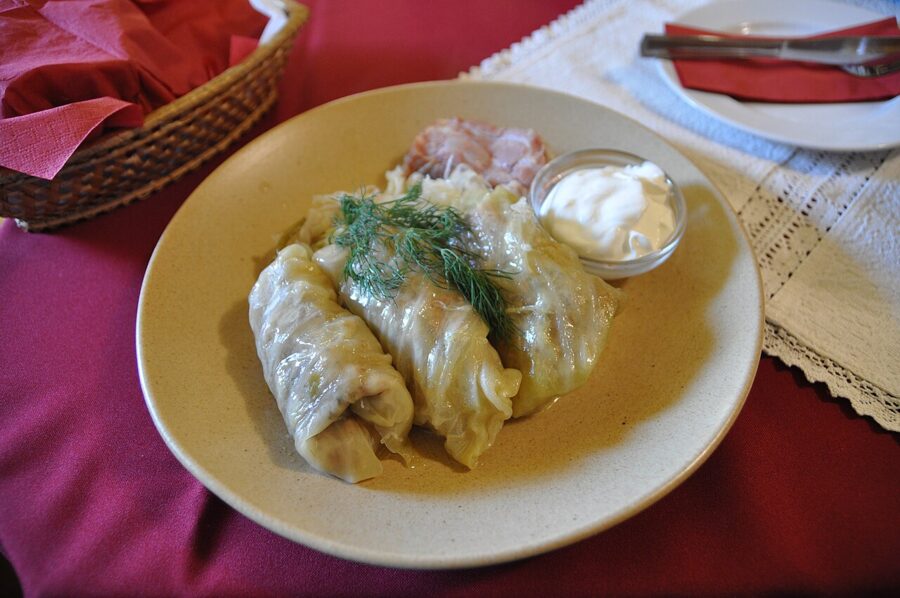
Stuffed cabbage is a winter dish: sour fermented cabbage leaves wrapped around minced pork and rice, stewed on a bed of more sauerkraut with smoked meat, and served with sour cream. It reheats well, which is why canteens make it in huge pots and why it often tastes better at lunch on its second day.

Főzelék
Főzelék has no good English name. It is a vegetable dish thickened until it sits on the plate: split pea, lentil, potato, savoy cabbage, or tökfőzelék, marrow with dill and sour cream. You eat it as a main with a feltét, a topping, such as fasírt (fried meatballs), a spoon of pörkölt or a fried egg.
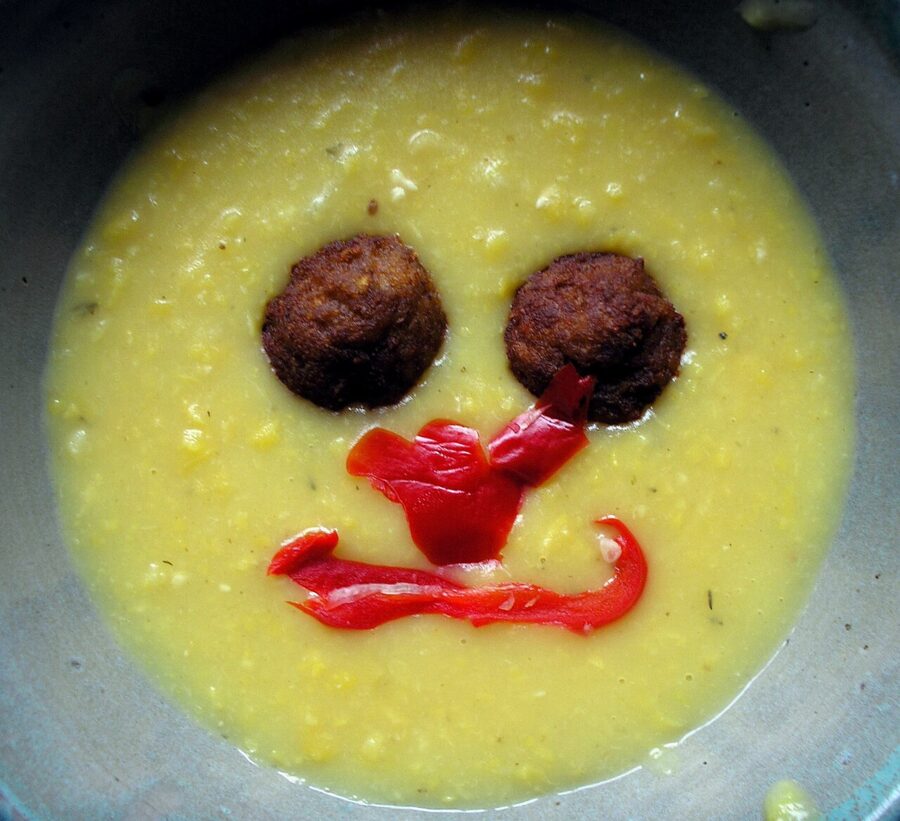

This is the cheapest good meal in the city and a lifeline for vegetarians who ask for it without the topping. At Mini Ételbár, a family canteen of 20 years’ standing, főzelék cost 1,100 Ft (about US$3) in January 2026, with 250–400 Ft more for a topping.
Paprika itself: sweet, hot, Szeged and Kalocsa
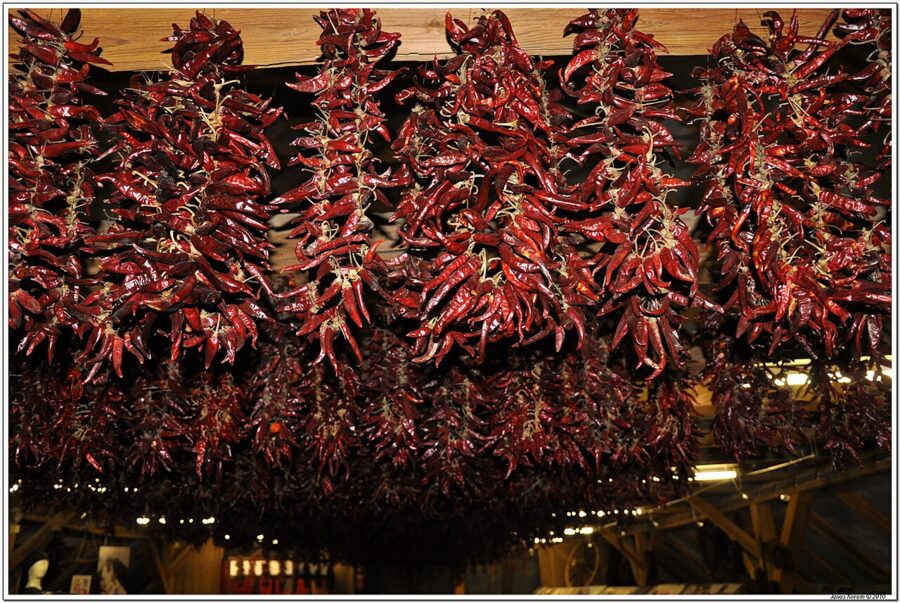
The two paprika towns of the southern plain have protected names: ground paprika from Szeged and from Kalocsa are each Hungarikums. Most packets say édesnemes (noble sweet) or csemege (delicate), both mild and fruity; erős means hot. Buy the sweet one for cooking at home and a small tin of hot to see which you actually use.

Many restaurant tables also carry Erős Pista, a hot paprika paste that shares a Hungarikum listing with its sweet sister Piros Arany. Add it a little at a time.

Cakes and coffee houses
Budapest’s cukrászda (cake shop) tradition is as serious as Vienna’s and cheaper outside the famous rooms.
Dobos, Esterházy, Rigó Jancsi, krémes and somlói
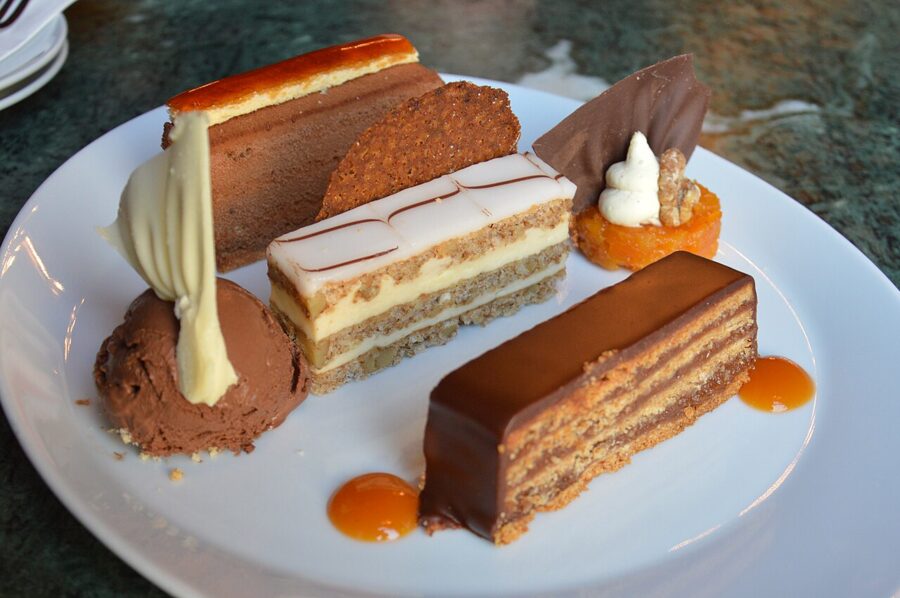
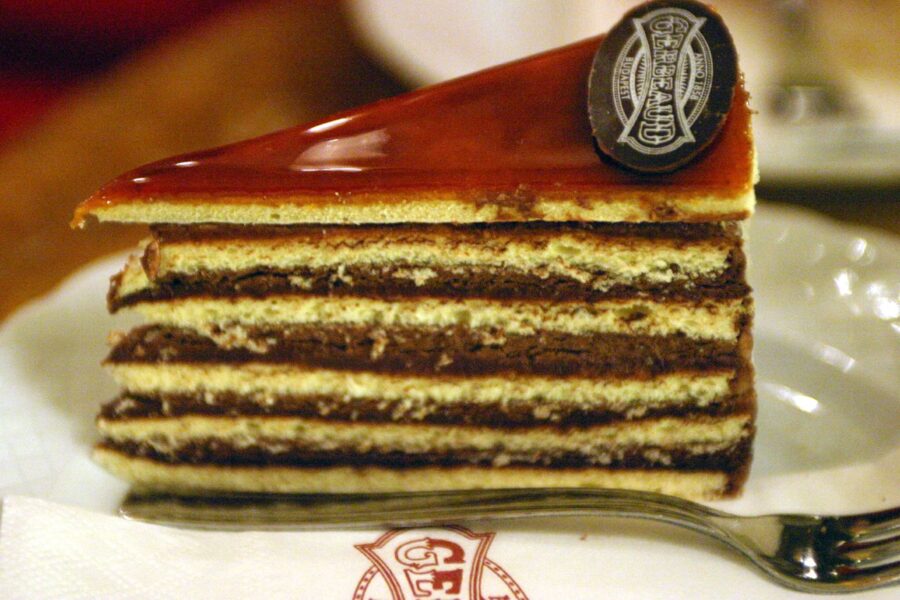
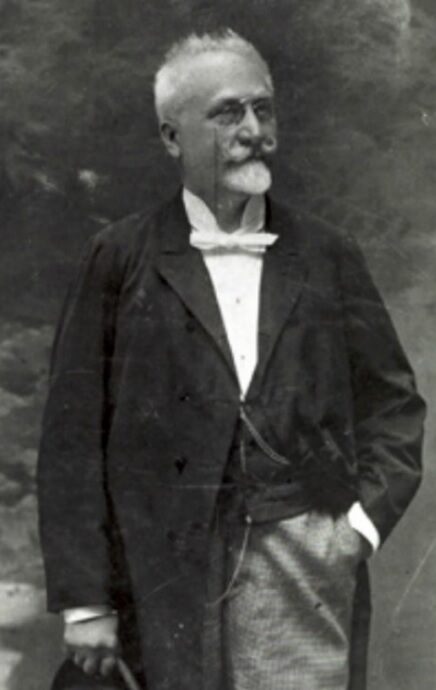
Dobos torta is five thin sponge layers with chocolate buttercream under a hard lid of caramel. The confectioner József C. Dobos created it in 1884 and showed it at the National General Exhibition in Budapest the following year, where Franz Joseph and Elisabeth tasted it. He kept the recipe secret until 1906, then gave it to the city’s confectioners’ guild; Dobostorta has been a Hungarikum since 2019.

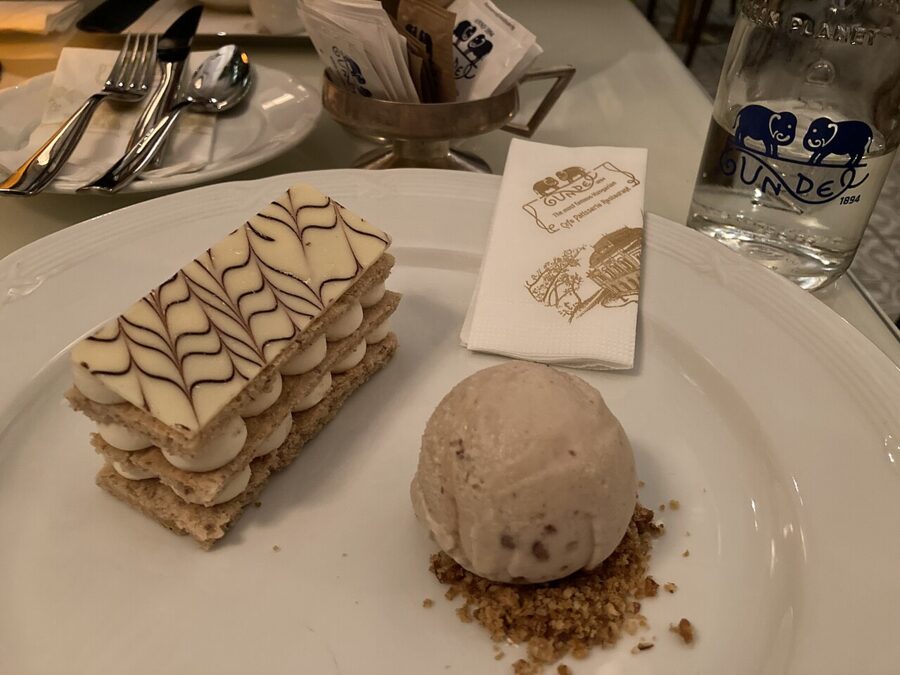
Esterházy torta layers nut meringue with a buttery cream and finishes with white fondant feathered with chocolate lines. It carries the name of an Esterházy prince who liked it; Hungarian sources name either Pál Antal or Miklós József and admit nobody knows which.

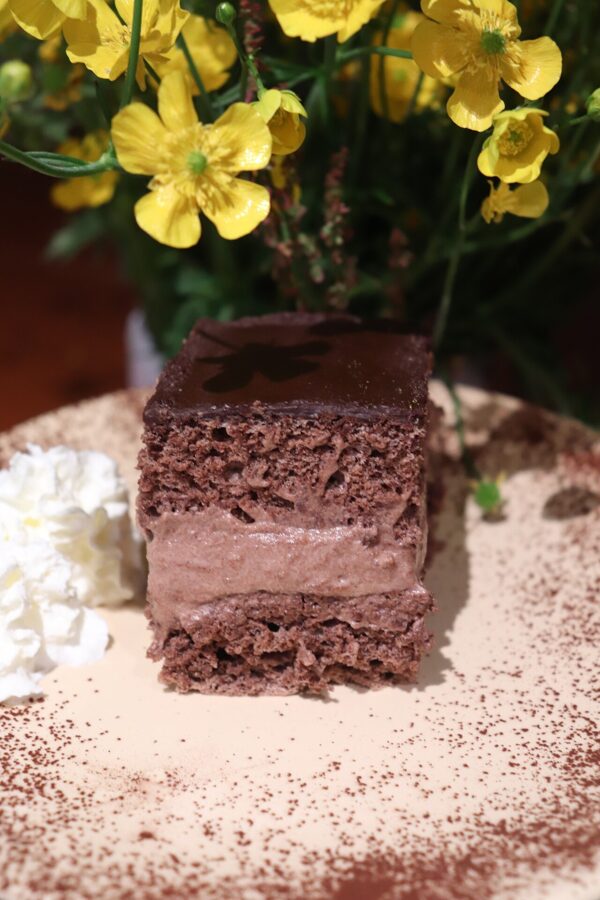
Rigó Jancsi is a cube of chocolate sponge and whipped chocolate cream. It is named after a Roma violinist, Jancsi Rigó (1858–1927), who met Clara Ward, the American-born wife of a Belgian prince, in a Paris restaurant in 1896 and ran off with her. The confectioner who made the cake named it after the scandal, and it outlived the marriage.

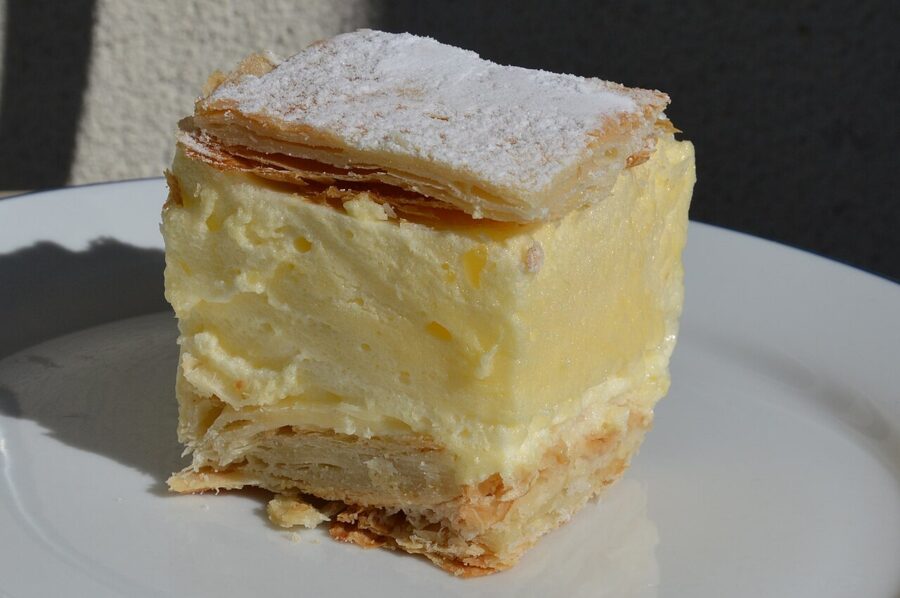
Krémes is the everyday one: a deep slab of vanilla custard between two sheets of puff pastry, dusted with icing sugar. Every neighbourhood cake shop makes one, and the good ones wobble.

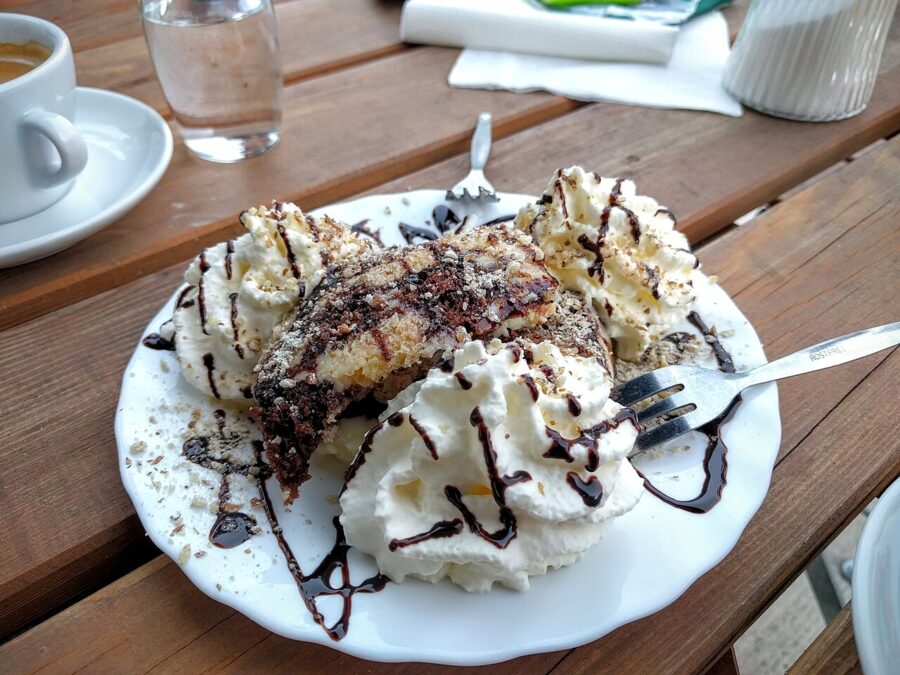
Somlói galuska is the restaurant dessert: sponge soaked in rum syrup with walnuts, raisins, vanilla cream, chocolate sauce and whipped cream. It is a post-war Budapest invention, put on the menu at Gundel in the late 1950s by the head waiter Károly Gollerits and made by the confectioner Béla Szőcs; it won a prize at the 1958 Brussels World’s Fair. Menza charges 2,890 Ft for it.

The historic coffee houses still serving
Three of the grand rooms are open as of November 2026, and each suits a different hour.
Gerbeaud on Vörösmarty tér traces itself to Henrik Kugler’s shop of 1858. It opens at 9am every day, closes at 8pm (9pm on Fridays and Saturdays) and takes no reservations, so arrive at opening or after 6pm. Order the Dobos here, and a Zserbó, the walnut and apricot slice named after Emil Gerbeaud himself.
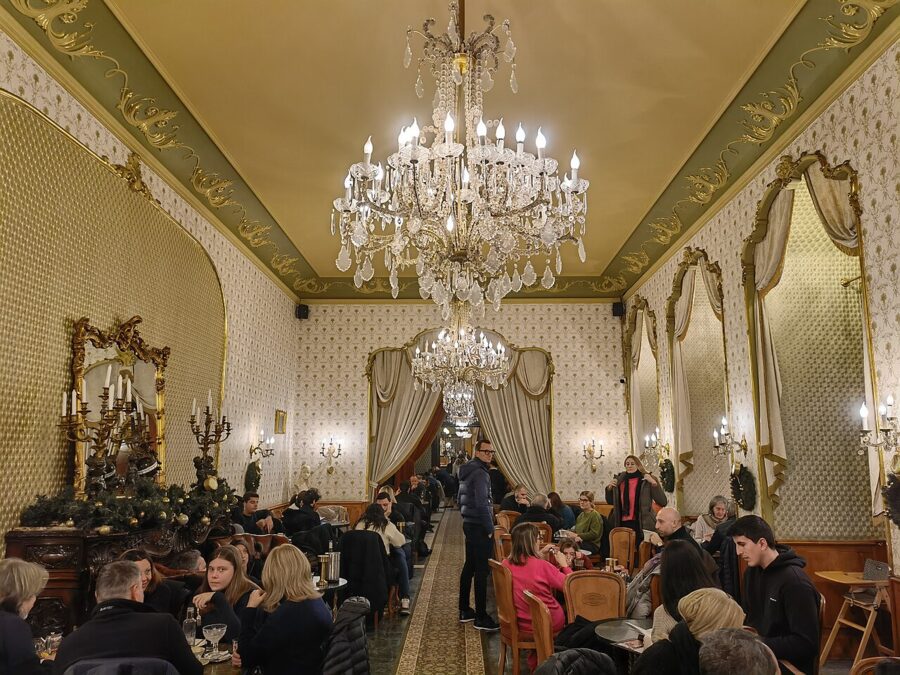
The New York Café on Erzsébet körút opened in 1894 and is the gilded one in every photograph. It opens at 7am and seats walk-ins first come, first served until 6pm; after that it recommends booking. Go at 7am for breakfast, when you get the marble and frescoes without the queue on the pavement.
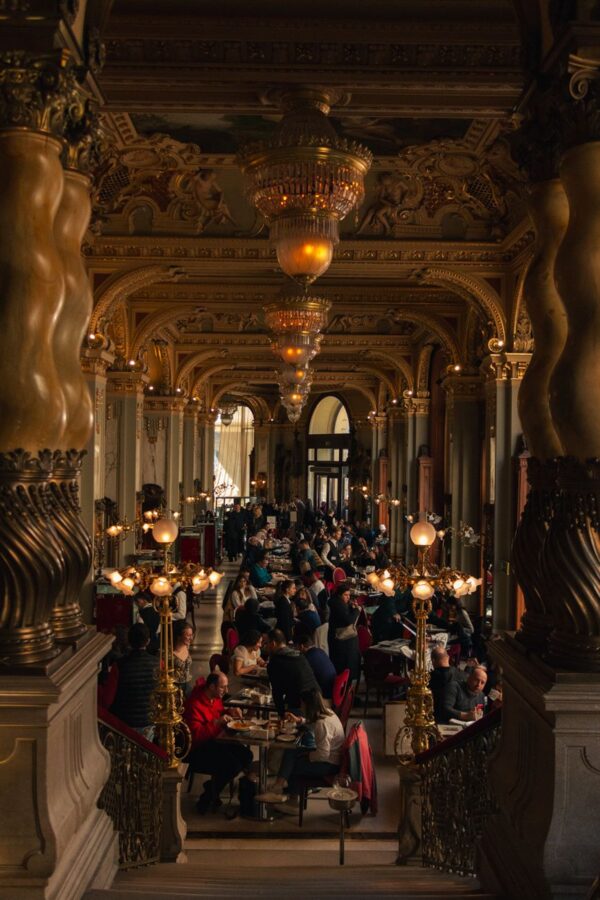
Centrál Kávéház at Károlyi utca 9 has served coffee since 1887 and is the writers’ café of the three: quieter, plainer and better value for a long sit. It reopened in April 2022 after a closure and celebrated four years in April 2026.
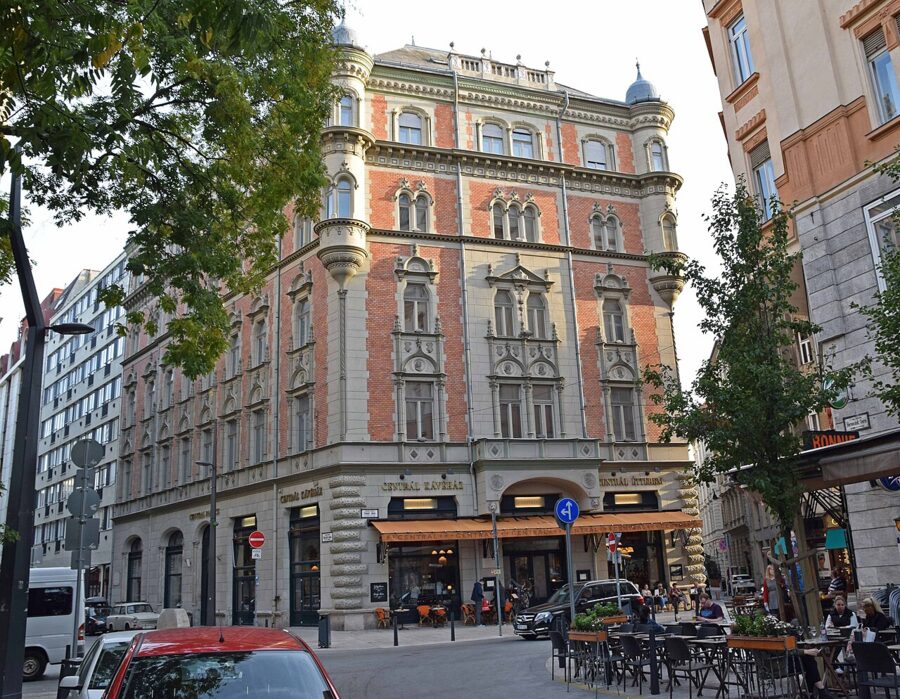

Markets and street food
The Great Market Hall
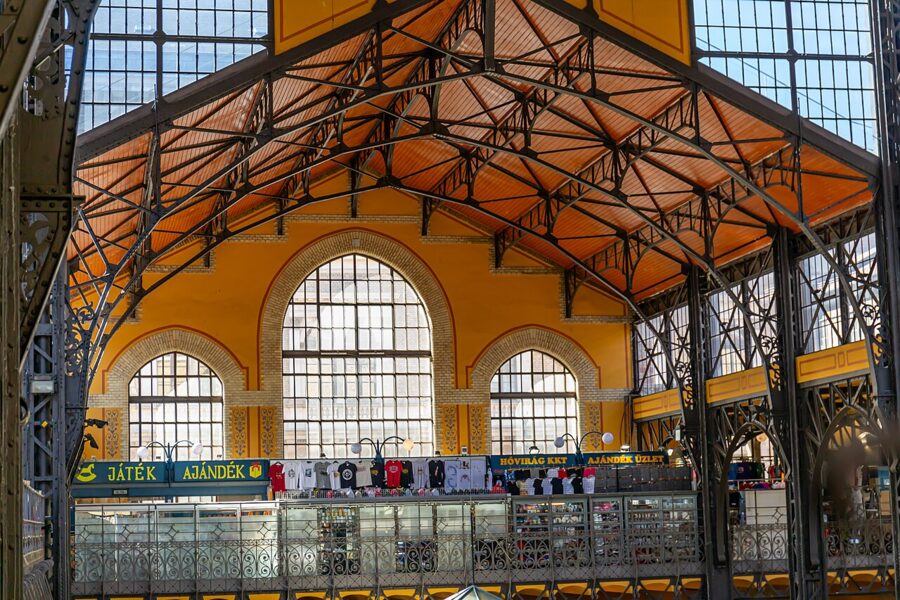
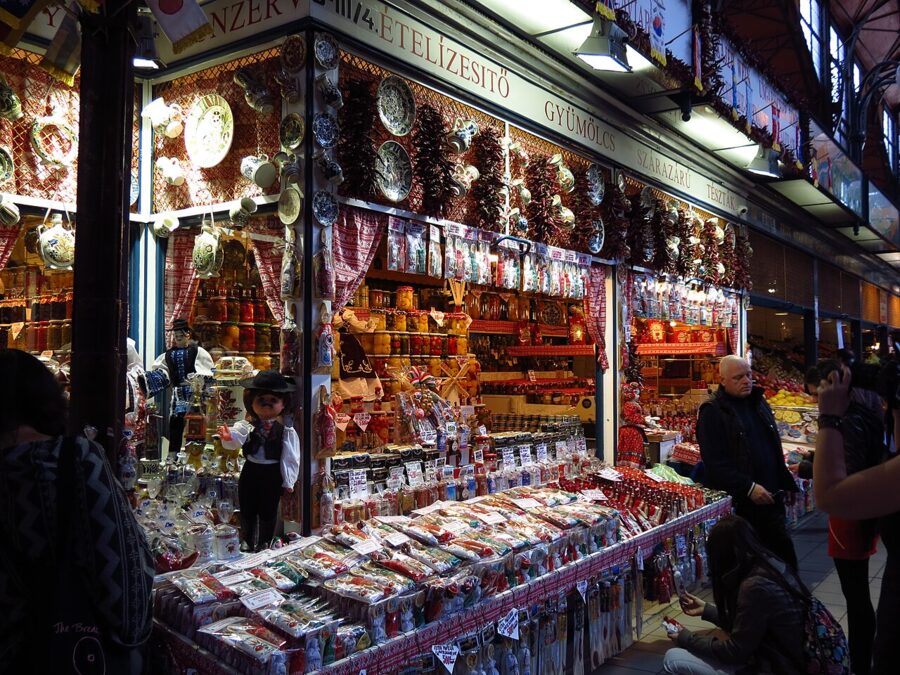
The Központi Vásárcsarnok, known as Nagycsarnok or the Great Market Hall, stands at the Pest end of Liberty Bridge on Fővám tér. Samu Pecz designed it, it was built in 1894–96 and opened in 1897 on the same day as four other Pest market halls, and its roof is covered in coloured Zsolnay tiles from Pécs. Entry is free.
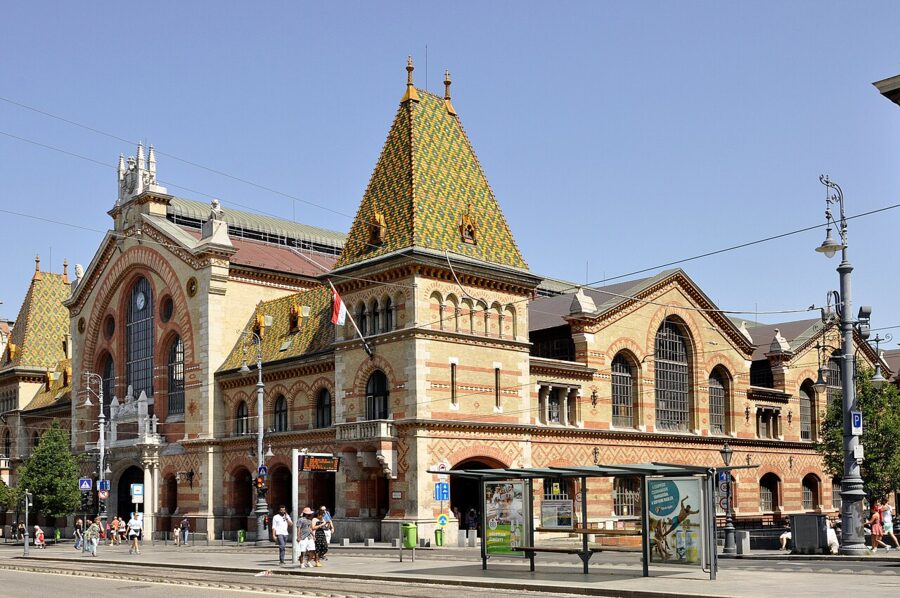

| Day | Hours (as of November 2026) |
|---|---|
| Monday to Friday | 6am–6pm |
| Saturday | 6am–4pm |
| Sunday | 10am–4pm |
| Public holidays | Closed |
Those are the operator’s Central Market Hall hours; expect fewer stalls trading on a Sunday. Work it top to bottom. The ground floor sells paprika, salami and produce, the basement has pickles and fish, and the upper gallery has embroidery, souvenirs and the hot-food counters where you eat lángos standing up.
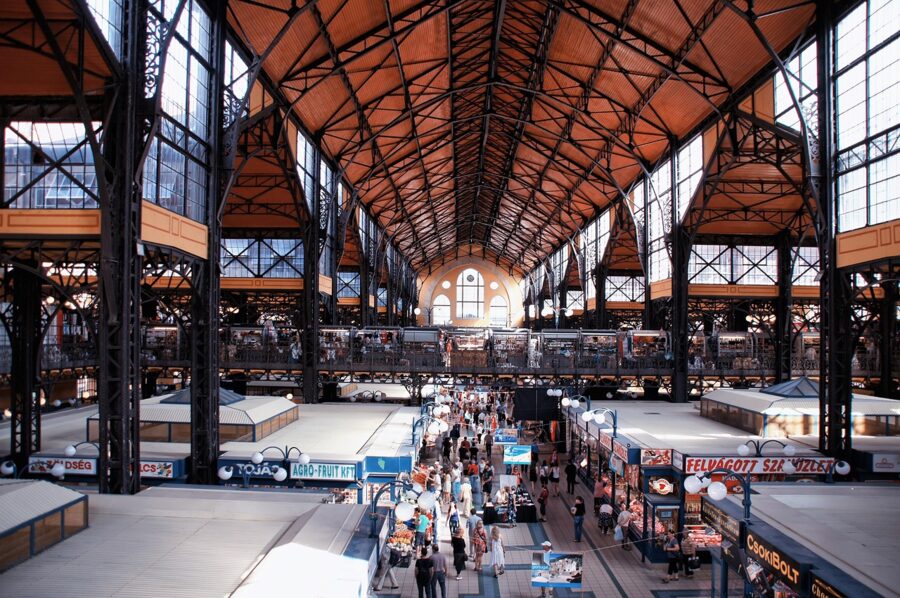
Look for PICK téliszalámi, the Szeged winter salami, a Hungarikum and a good gift because it travels. Sealed paprika and salami belong in the hold bag. A bottle of pálinka or Tokaji does too, since the carry-on liquid rules leave no room for a half-litre bottle.
Lángos
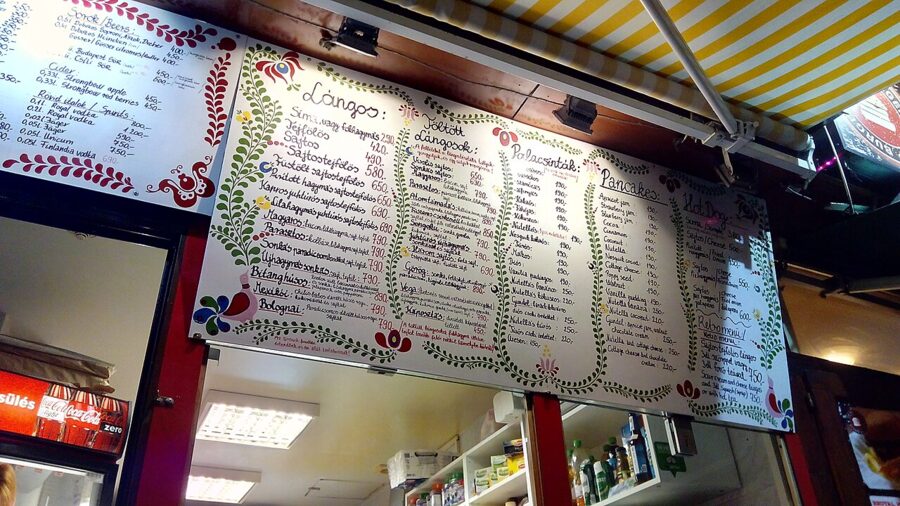
Lángos is a disc of yeasted dough deep-fried until it puffs, then covered in sour cream and grated cheese, with garlic if you want it. It began as a way of using the last scrap of bread dough on baking day and was listed as a Hungarikum in 2023. Eat it hot; ten minutes later it is a sadder thing.
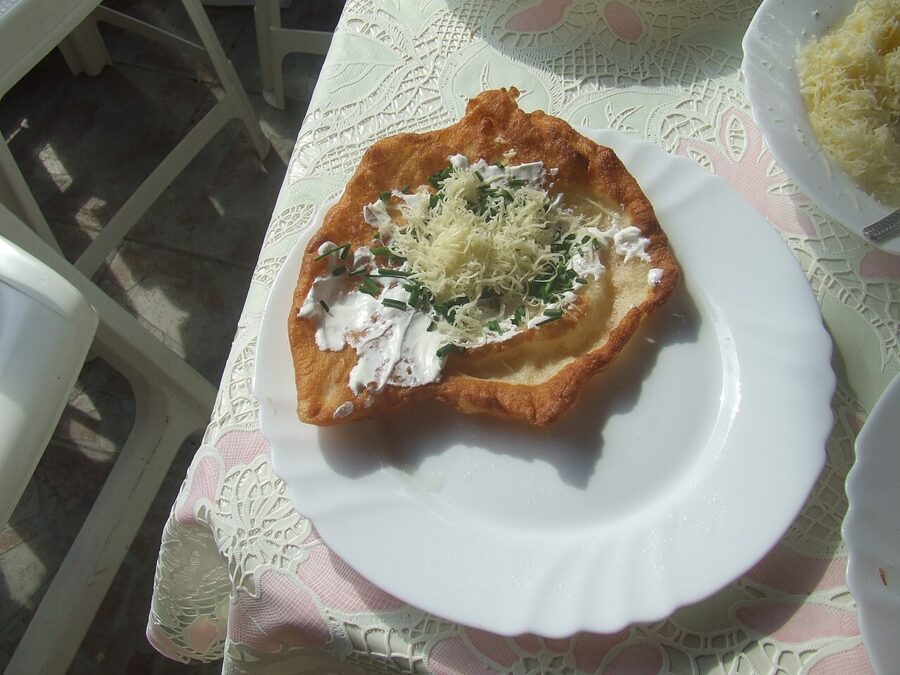

The upper floor of the market hall is the obvious place. In the centre, Retro Lángos now has two branches, at Bajcsy-Zsilinszky út 25 and Vécsey utca 3 near Parliament, and its classic sour cream and cheese lángos was 3,490 Ft (about US$10) in August 2026.

Kürtőskalács, and where it is really from
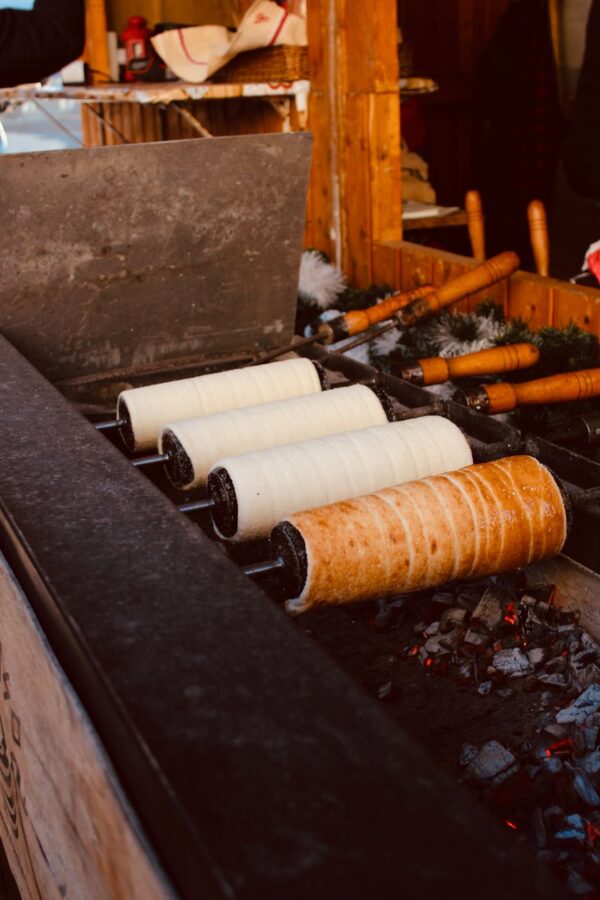
Kürtőskalács, chimney cake, is sweet dough wound round a wooden spit, rolled in sugar and turned over charcoal until the sugar caramelises into a crust. Budapest sells it everywhere, but it comes from Transylvania, now in Romania, and specifically from the Székely Hungarians there. The first known written recipe is from 1784, by Countess Mária Mikes, and Hungary listed it as a Hungarikum in 2015 while describing it as Székely, Transylvanian and Hungarian at once.
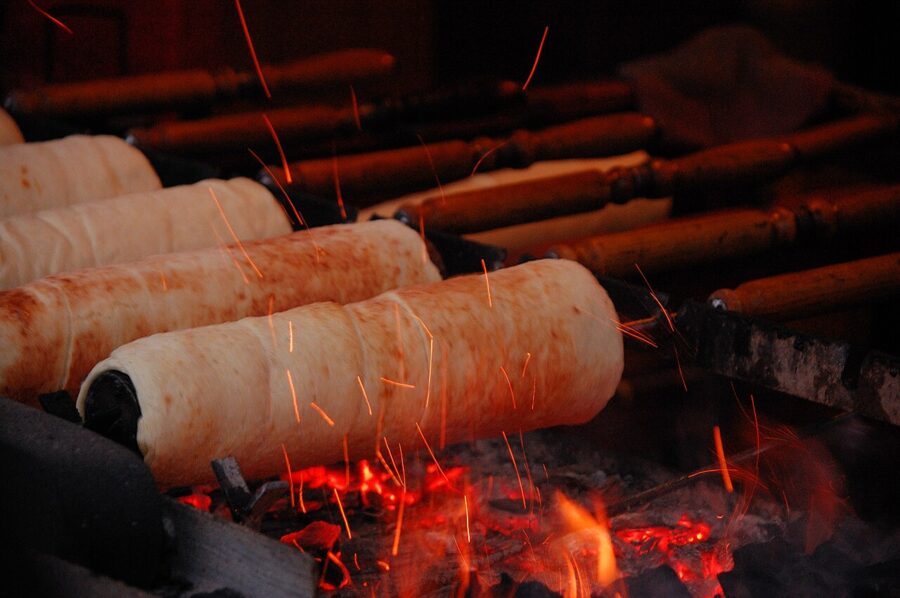

The traditional coatings are plain sugar, ground walnut or cinnamon. The ice-cream-filled cones sold in the centre are a modern invention, pleasant enough, though nothing to do with Transylvania.
Wine, pálinka and Unicum
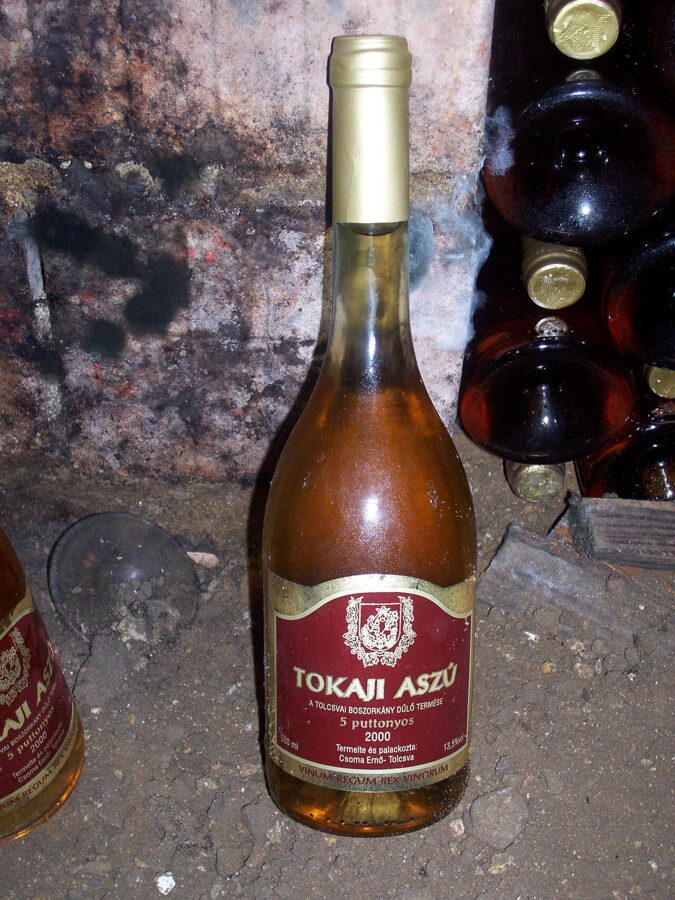
Tokaji Aszú
Tokaj, in the north-east, makes Hungary’s most famous wine, and its vineyards have been on the Tokaj Wine Region Historic Cultural Landscape World Heritage listing since 2002. Aszú berries are grapes shrivelled by noble rot, added to a base wine to make a sweet wine with sharp acidity. The old puttonyos scale counted how many hods of aszú went in.
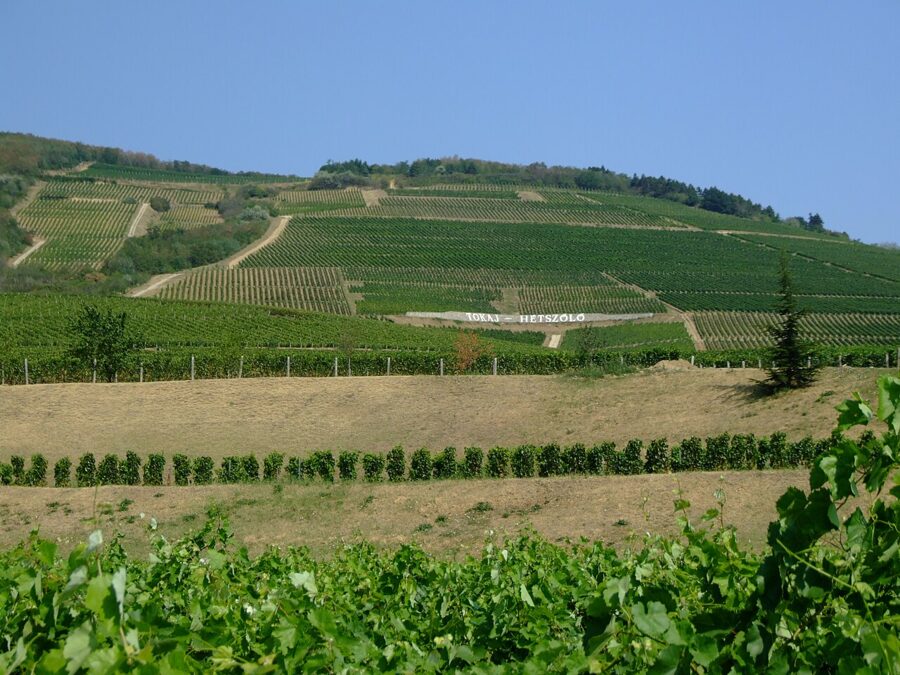

Since 2013 every Tokaji Aszú must reach at least 120 grams of residual sugar per litre, the old five-puttonyos level, and six puttonyos means at least 150. The three- and four-puttonyos labels were dropped, so an older bottle labelled that way is a pre-reform wine. In a Budapest wine bar, a small glass is enough with a slice of Dobos.

Egri Bikavér and Villány
Egri Bikavér, Bull’s Blood of Eger, is a red blend and another Hungarikum. The name hangs on a legend from the Ottoman siege of Eger in 1552, when the defenders’ red-stained beards were said to come from bull’s blood rather than wine. A good modern Bikavér is far better than the cheap export bottles that made the name.

Villány, in the warm far south, is the place for big reds, Cabernet Franc above all. If a wine list offers a Villány Franc, it is a safe order with pörkölt.

Fröccs
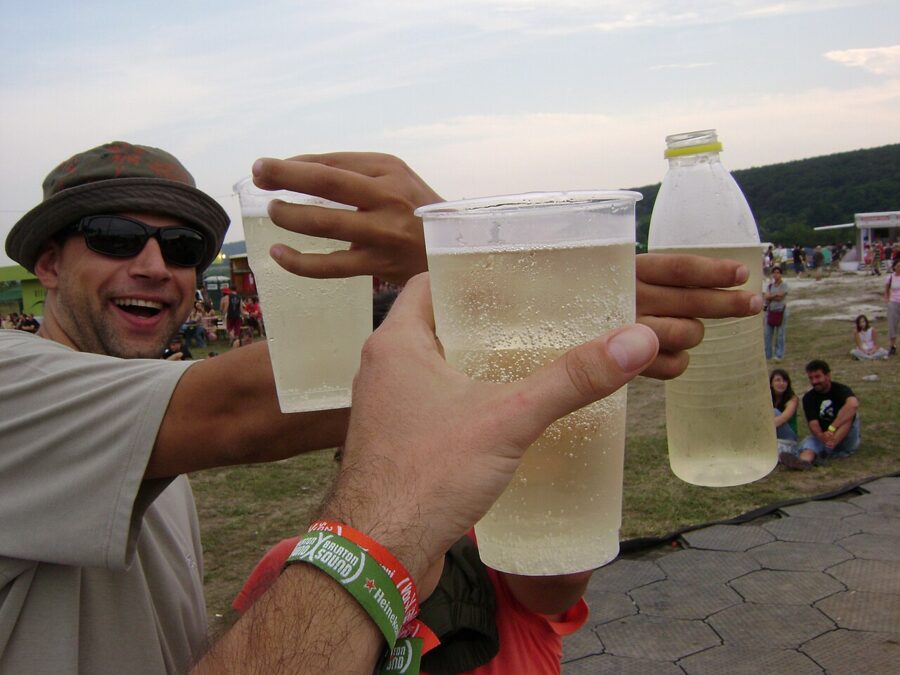
Fröccs is wine and soda water, and Hungarians take the ratios seriously enough to name them. A kisfröccs is 1 dl of wine and 1 dl of soda, a nagyfröccs 2 dl of wine to 1 of soda, and a hosszúlépés (“long step”) 1 dl of wine to 2 of soda. It is a Hungarikum too, and on a hot afternoon it is the right drink.

Pálinka
Pálinka is fruit brandy, and the name is protected: since 2004 it has been an EU-registered designation, and only a pure distillate of fruit grown and distilled in Hungary can carry it, with apricot brandy from four Austrian provinces the single exception. It must be at least 37.5% alcohol and is often stronger. Barack is apricot, szilva plum, körte pear and cseresznye cherry.
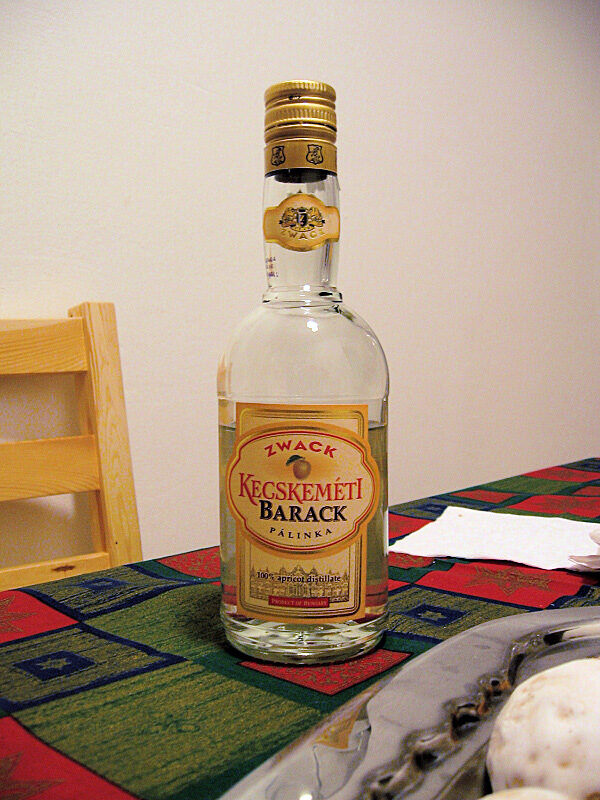

The toast is egészségedre, “to your health”. Many Hungarians still avoid clinking beer glasses, a habit tied to the story that Austrian officers clinked beer after executing thirteen Hungarian generals at Arad in 1849. Clink the pálinka; leave the beer alone.
Unicum
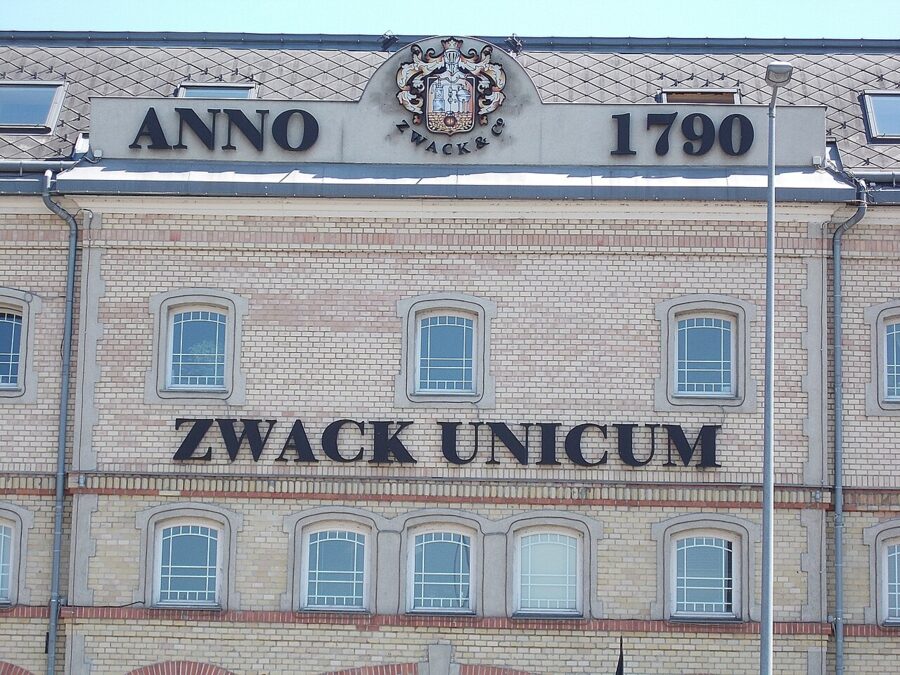
Unicum is the black, bitter herbal liqueur in the round bottle. The company tells the story of a 1790 recipe from a Dr Zwack, court physician to Joseph II, who supposedly called it “a Unikum”; historians find no trace of that doctor, and the brand itself was registered by József Zwack in 1883. The recipe uses more than 40 herbs, and when the communist state nationalised the firm in 1948 the family handed over a false one.
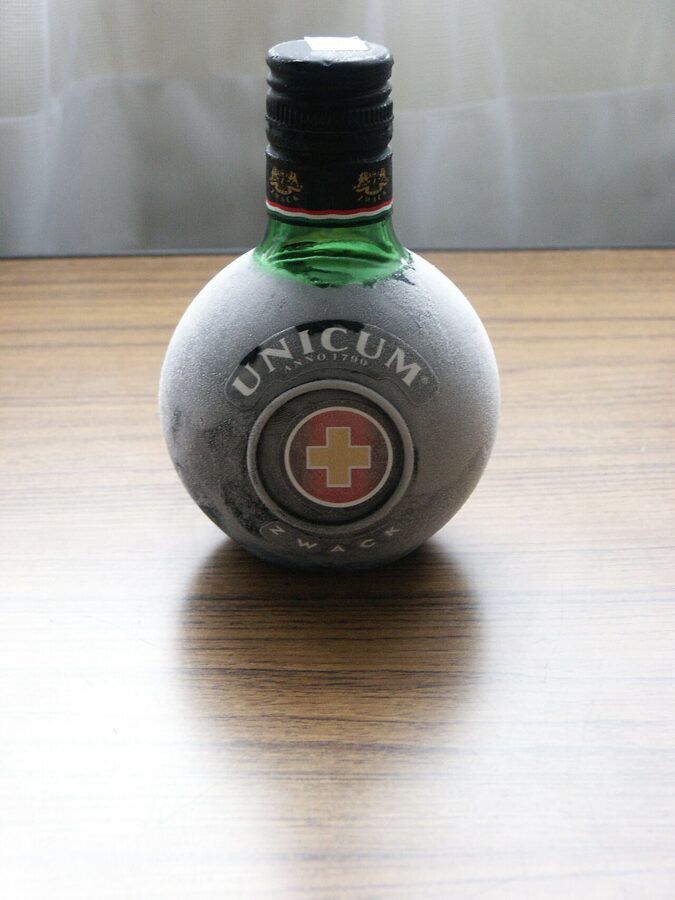

Péter Zwack came back to Hungary in 1988 and the family bought the company back. Zwack Unicum now also makes Unicum Plum and Unicum Riserva, which is finished in Tokaji aszú casks. The House of Unicum at Dandár utca 1 in District IX runs guided tours of the old distillery and cellar with a tasting; book a slot through its own site.

Where to drink: wine bars and ruin bars
For Hungarian wine by the glass, DiVino at Szent István tér 3, beside the Basilica, opened in 2011 and builds its list around the young winemakers of the Junibor association. Doblo at Dob utca 20 is darker and later: 4pm to 1am Monday to Thursday, 2pm to 3am on Fridays and Saturdays, and 2pm to 1am on Sundays.
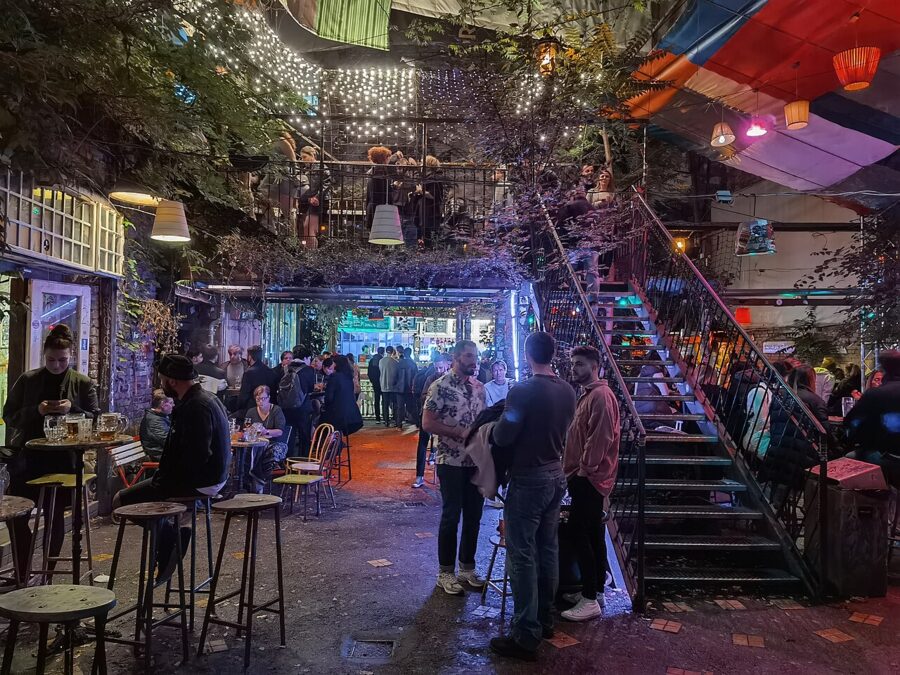
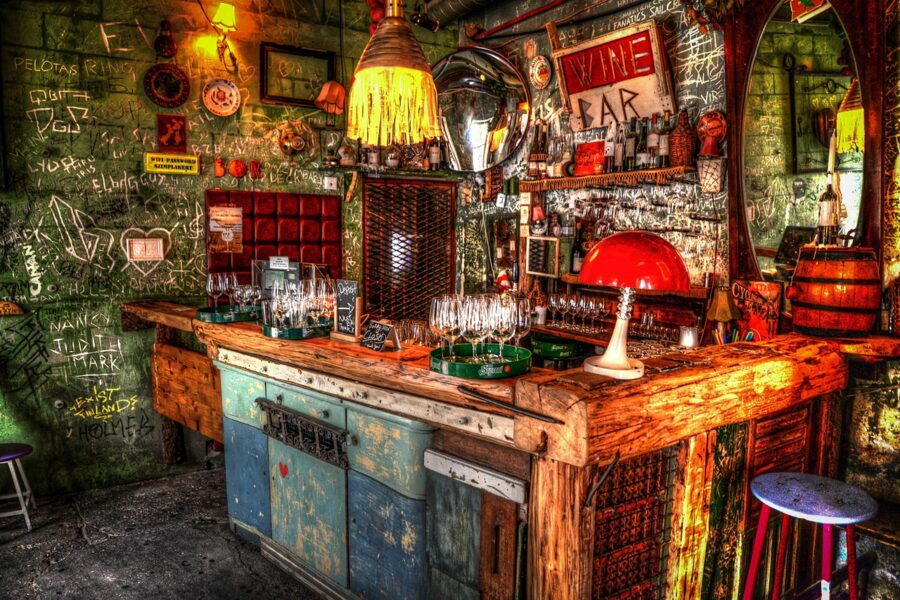
The ruin bars (romkocsma) are pubs built into half-derelict houses in District VII, the old Jewish quarter. Szimpla Kert on Kazinczy utca is the best known and worth one early drink before it turns into a queue.
The étkezde: lunch where Budapest eats it
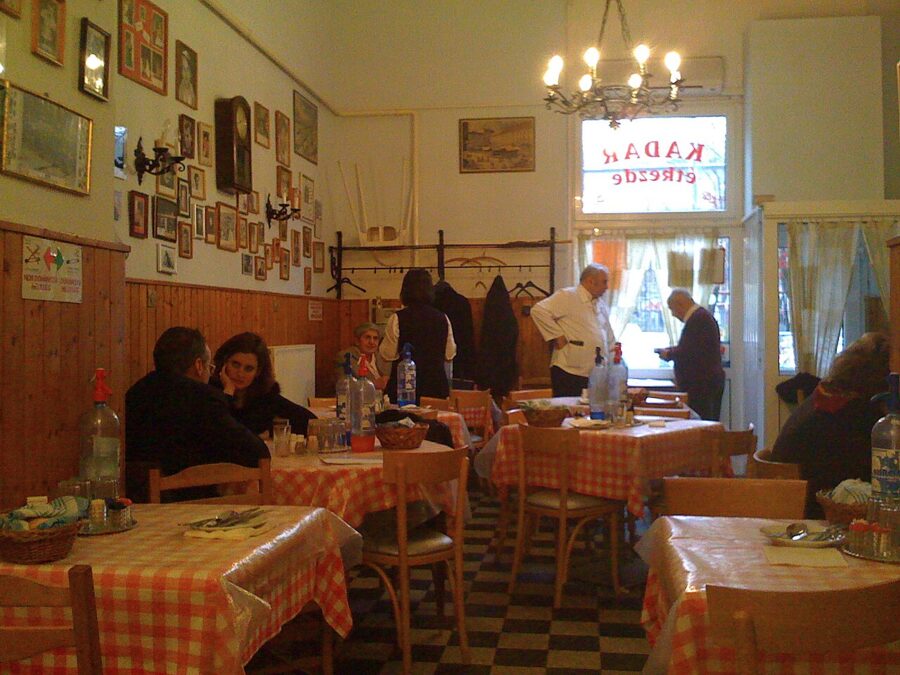
An étkezde or kifőzde is a small lunch canteen with a handwritten menu and a short list of home-cooked dishes that runs out. This is where to eat főzelék and töltött káposzta at local prices.
The most famous, Kádár Étkezde on Klauzál tér, opened in 1957 and closed in 2020. It reopened on 26 September 2025 with nearly the old menu and its sólet, a slow-cooked bean dish from the Jewish quarter’s tradition, according to the reopening coverage.

For a fixed lunch, Toldi Konyhája charged 2,000 Ft for soup and a main in January 2026, one of the cheapest in the city, and Menza’s weekday menu is 2,890 Ft from 11.30am until it runs out. Bring cash for the smallest canteens, and arrive by 12.30pm.
Prices, tipping and the service charge
Prices are from the places’ own menus or dated 2026 reports, at roughly 339 Ft to the US dollar.
| What | Where | Price (2026) |
|---|---|---|
| Daily menu, soup and main | Toldi Konyhája / Menza | 2,000 Ft / 2,890 Ft (about US$6 / US$9) |
| Főzelék, plus topping | Mini Ételbár | 1,100 Ft, plus 250–400 Ft |
| Gulyásleves with csipetke | Menza | 3,590 Ft |
| Gulyás | Stand25 | 5,900 Ft |
| Beef pörkölt with galuska | Menza | 5,390 Ft (about US$16) |
| Catfish paprikás | Stand25 | 9,900 Ft |
| Somlói galuska | Menza | 2,890 Ft |
| Lángos, sour cream and cheese | Retro Lángos | 3,490 Ft |
Under the service charge decree in force since 1 January 2025, a restaurant may add a service charge of at most 15% of the VAT-inclusive bill for ordinary diners, and it must be shown as a separate line on your receipt. When the bill is invoiced to a company, the cap is 20%. If the line is there, leave nothing extra unless the service was exceptional.
Where there is no service charge, rounding up by about 10% is the custom in restaurants. Say the total you want to pay as you settle rather than leaving coins on the table. Canteens and market counters expect nothing.
A two-day eating plan
This plan assumes weekdays, when the canteens are open, and stays on the Pest side.
| When | Day one | Day two |
|---|---|---|
| Breakfast | Great Market Hall at 8am: paprika and salami downstairs, then lángos upstairs | New York Café at 7am, before the walk-in queue |
| Late morning | Walk Kecskeméti utca to Károlyi utca; coffee and krémes at Centrál | House of Unicum tour in District IX (book ahead) |
| Lunch | Kádár Étkezde on Klauzál tér (not open every day; check first): főzelék or töltött káposzta | Daily menu at Menza on Liszt Ferenc tér |
| Afternoon | Gerbeaud on Vörösmarty tér: Dobos and Zserbó | Retro Lángos on Vécsey utca if you missed it; in Advent, kürtőskalács on Vörösmarty tér |
| Early evening | Szimpla Kert, early, for a fröccs | DiVino by the Basilica: Bikavér, a Villány Franc, a glass of aszú |
| Dinner | Gulyás and pörkölt at Menza | Stand25: gulyás, then catfish paprikás |
| Last drink | Doblo on Dob utca: a pálinka | One Unicum, then bed |
Two days of this is more than enough food. Order the soup as your main, eat your big meal at noon, check the bill for the service line, and the city’s cooking costs about what a single tourist-terrace dinner does elsewhere.